
Young Adult Cancer Patients May Need Different Treatment Options
Mount Sinai study uncovers genomic differences between 14 tumor types in young adults versus the same cancers in older ones
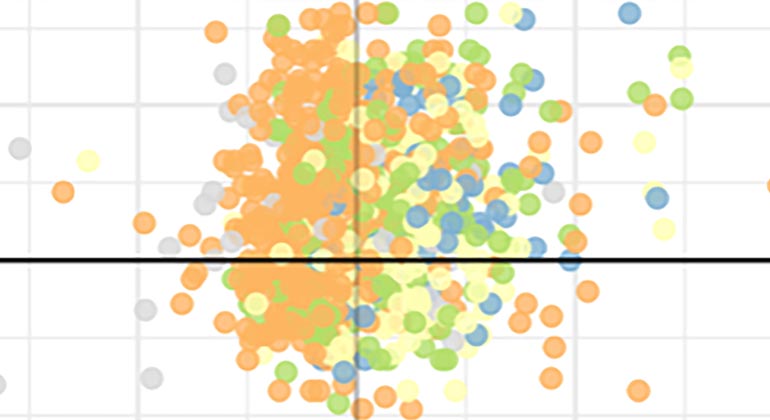
Not all tumors are alike. Young adults who are diagnosed with skin, colon, and other cancer types may require different treatments than older patients receive. That is the primary conclusion of a Mount Sinai study which systematically compared the genomes of 14 different types of cancers that affected both younger and older adults. The results published in Cell Reports suggest that several genetic hallmarks may play key roles in identifying precise treatment options for young adult cancer patients.
The study was led by William Lee, PhD, a former master’s degree student in the laboratory of Kuan-lin Huang, PhD, Assistant Professor of Genetics and Genomic Sciences at the Icahn School of Medicine at Mount Sinai.
According to at least two recent studies, cancer diagnosis rates in young adults may be rising. However, as the authors of this study note, most of what is known about treating various cancers is based on studies of older patients, creating an apparent knowledge gap that needs to be filled.
To address this, the researchers compared the genomic data of 14 different types of tumors from 1,757 adult patients who were under 50 years of age with that of 3,608 who were older than 50. The data was from The Cancer Genome Atlas, a project funded by the National Cancer Institute. For each tumor, the researchers systematically compared genetic mutations, chromosomal alterations, tumor immune system factors, and the potential to be treated with a known anti-cancer therapy. They then validated the results using additional samples from the International Cancer Genome Consortium.
Overall, the results showed that each type of young adult tumor could be distinguished from older versions by a specific set of hallmarks. For example, the relative proportions of well-known mutations seen in low-grade gliomas, a type of brain tumor, shifted greatly with the patient’s age. Endometrial tumors from young adults, by contrast, tended to have more mutations than those from older patients.
Nevertheless, there were some common trends across cancer types. Most notably, the results suggested that the young adults’ immune systems responded differently to most of the tumors. This included responses by macrophage and dendritic cells, which are often exploited by anti-cancer immunotherapies.
Finally, the researchers found several differences between how young and older adult tumors may respond to different treatment options, such as to drugs designed against cancer-causing mutations in the BRAF gene. Here the results suggested that anti-BRAF drugs may provide effective treatment options for a higher fraction of young adult skin cancer patients than older ones who have the same tumors. In contrast, older colon cancer patients may benefit more from anti-BRAF treatment options than younger ones. The authors have made these results accessible to other cancer researchers. They also plan to work with others on testing out new ideas for how to combat tumors in young adults.
Who: Kuan-lin Huang, PhD, Assistant Professor of Genetics and Genomic Sciences, Icahn School of Medicine at Mount Sinai, and William Lee, PhD, former graduate student, Icahn School of Medicine at Mount Sinai.
This study was supported by the National Institutes of Health (GM138113) and the Icahn School of Medicine at Mount Sinai.
Article
Lee, W. et al., Genomic and Molecular Features Distinguish Young Adult Cancer from Later-Onset Cancer. Cell Reports, November 16, 2021, DOI: 10.1016/j.celrep.2021.110005.
About the Mount Sinai Health System
Mount Sinai Health System is one of the nation’s leading integrated academic health systems and one of the largest in the New York metropolitan area. Its comprehensive system includes seven hospitals, more than 400 outpatient practices, over 600 research and clinical laboratories, the Icahn School of Medicine at Mount Sinai, the Graduate School of Biomedical Sciences, and the Mount Sinai Phillips School of Nursing. Together, the Health System comprises approximately 48,000 employees, more than 9,000 physicians, and 8,600 nurses.
As a leading learning health system, Mount Sinai combines clinical expertise with scientific discovery to improve patient care while training the next generation of health care and biomedical leaders. The Health System provides care across every stage of life, from prenatal care through geriatrics, while advancing personalized medicine through artificial intelligence, data science, and biomedical research.
Mount Sinai is consistently recognized among the nation’s leading academic health systems for patient care, research, and education. The Mount Sinai Hospital is ranked No. 1 in New York by Newsweek and No. 5 on the magazine’s World’s Best Hospitals list. The Icahn School of Medicine at Mount Sinai ranks No. 11 among U.S. medical schools and No. 1 among freestanding medical schools for National Institutes of Health funding, reflecting the strength of its scientific enterprise and leadership in biomedical research.