
New York State Department of Health Grants Emergency Use Authorization to Mount Sinai for Quantitative COVID-19 Antibody Test
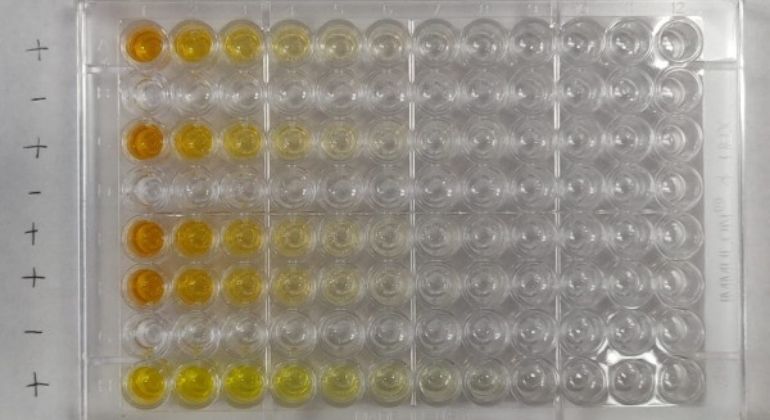
The Clinical Laboratories of The Mount Sinai Hospital has received emergency use authorization from the New York State Department of Health (NYSDOH) for quantitative use of Mount Sinai’s COVID-19 antibody test, making Mount Sinai’s lab the first in the country to run an authorized, fully quantitative antibody test that can deliver a precise numeric measurement of the level of antibodies in a patient’s blood. The value of an accurate, precise, and reliable antibody test that measures the level of antibodies an individual has cannot be underestimated. Such a test is urgently needed to help determine public health strategies and to accelerate both the development and evaluation of therapeutic treatments and vaccines.
“The Mount Sinai antibody test has been used on more than 68,000 patients, representing a highly diverse population due to the nature of our Health System, and gives us great confidence in the reliability and clinical relevance of the test,” said Carlos Cordon-Cardo, MD, PhD, Irene Heinz Given and John LaPorte Given Professor and Chair of the Lillian and Henry M. Stratton-Hans Popper Department of Pathology, Molecular and Cell-Based Medicine at the Icahn School of Medicine at Mount Sinai. “We have also used this testing with our essential workers to give insights into past infection rates and what levels of antibodies in people may ultimately be protective.”
In April 2020, the Mount Sinai antibody test was one of the first to receive emergency use authorization for qualitative use (detection of the presence or absence of antibodies) from both the U.S. Food and Drug Administration and the NYSDOH. The Mount Sinai antibody test detects the presence or absence of antibodies to SARS-CoV-2, the virus that causes COVID-19, in addition to measuring the titer (level) of antibodies a person has produced. It utilizes not one, but two virus antigens: the full-length spike protein and its receptor-binding domain (RBD), which is correlated with antibody neutralization, as described in a recent paper published in Nature Medicine. The test was used recently in a study by researchers at the Icahn School of Medicine at Mount Sinai that found most people with COVID-19 mount a robust antibody response that is stable for at least three months.
Created by a team of internationally renowned scientists and clinicians at the Icahn School of Medicine at Mount Sinai, the Mount Sinai antibody test is a serological enzyme-linked immunosorbent assay (ELISA) that was designed to measure the presence or absence of SARS-CoV-2 antibodies, in addition to measuring the titer (level) of antibodies a person has produced.
“One of the most important points is that what we measure in this assay correlates very well with virus neutralization. So, we can indirectly—and very easily—measure how well one person's serum can block and ultimately kill the virus without having to work with any infectious virus. That's amazing and allows us to measure thousands of samples per day,” said Florian Krammer, PhD, Mount Sinai Professor of Vaccinology at the Icahn School of Medicine at Mount Sinai, who led the team that developed the antibody test.
"Our quantitative assay is being used to determine whether an individual has been exposed to SARS-CoV-2, to check their quantitative titers and eligibility for plasma donation, and to understand their antibody titers both in the initial response to SARS-CoV-2 and over time,” said Ania Wajnberg, MD, Director of the Antibody Donor Identification Program at Mount Sinai. “Eventually, this will help us link each individual's response to the immune correlate for COVID-19, which is a huge step forward in our fight against this virus."
About the Mount Sinai Health System
Mount Sinai Health System is one of the nation’s leading integrated academic health systems and one of the largest in the New York metropolitan area. Its comprehensive system includes seven hospitals, more than 400 outpatient practices, over 600 research and clinical laboratories, the Icahn School of Medicine at Mount Sinai, the Graduate School of Biomedical Sciences, and the Mount Sinai Phillips School of Nursing. Together, the Health System comprises approximately 48,000 employees, more than 9,000 physicians, and 8,600 nurses.
As a leading learning health system, Mount Sinai combines clinical expertise with scientific discovery to improve patient care while training the next generation of health care and biomedical leaders. The Health System provides care across every stage of life, from prenatal care through geriatrics, while advancing personalized medicine through artificial intelligence, data science, and biomedical research.
Mount Sinai is consistently recognized among the nation’s leading academic health systems for patient care, research, and education. The Mount Sinai Hospital is ranked No. 1 in New York by Newsweek and No. 5 on the magazine’s World’s Best Hospitals list. The Icahn School of Medicine at Mount Sinai ranks No. 11 among U.S. medical schools and No. 1 among freestanding medical schools for National Institutes of Health funding, reflecting the strength of its scientific enterprise and leadership in biomedical research.