Mount Sinai Receives $2.6 Million Grant From PolyBio Research Foundation for Long COVID Clinical Trials
Funding will also support researching other complex illnesses and medical education
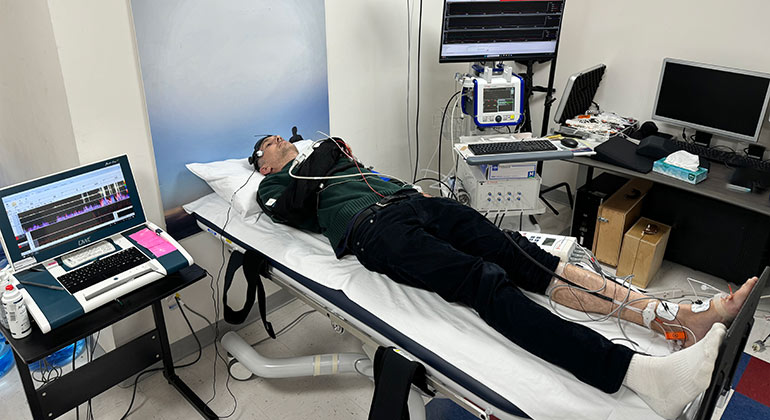
Mount Sinai’s Department of Rehabilitation and Human Performance has been awarded a $2.6 million grant from PolyBio Research Foundation to support its work on “long COVID,” the syndrome that can linger for months or years after an acute case of COVID-19.
The grant will go to Mount Sinai’s Cohen Center for Recovery from Complex Chronic Illnesses (CoRE) to support two clinical trials, free medical education, and new clean-air infrastructure at the Cohen Center to protect patients from possible reinfection.
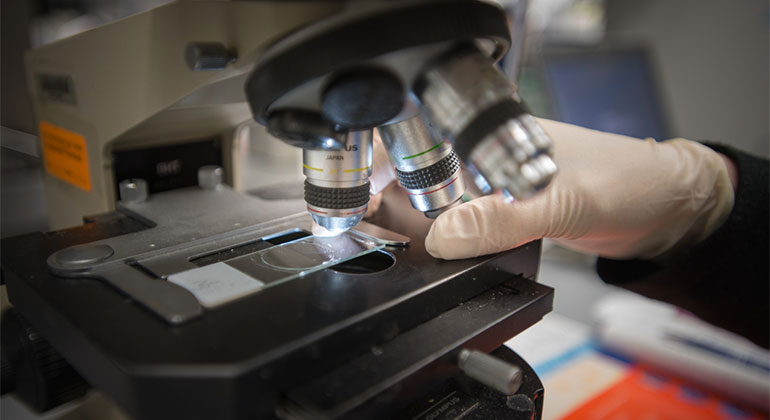
The first clinical trial will focus on the effectiveness of using antiviral medications to treat people with long COVID. Research shows that people with long COVID either experience reactivations of old viral infections, such as the Epstein-Barr virus, or persistent symptoms caused by SARS-CoV-2, the virus that causes COVID-19. This study will test whether two affordable repurposed HIV antivirals (Truvada® and maraviroc) will help mitigate those symptoms. Researchers will collect blood and saliva from trial participants and analyze them for infectious, immune, and metabolic biomarkers that may change as a result of the antiviral treatment. This will help researchers better understand how these antiviral treatments improve symptoms, and help them to predict which patients may respond to these drugs in the future.
The second clinical trial will test whether the enzyme lumbrokinase can help reduce the formation of microclots in patients with long COVID, and/or myalgic encephalomyelitis/chronic fatigue syndrome (ME/CFS). Past studies suggests the formation of microclots in the blood may contribute to overall symptom severity in these conditions. In this clinical trial, researchers will test patients for microclots before taking lumbrokinase, then test them after taking the supplement to see if this enzyme breaks down microclots. Researchers will also evaluate whether symptoms improve for patients while they are taking the supplement. This trial is already being conducted on patients with chronic Lyme disease and supported by the Steven & Alexandra Cohen Foundation’s Clinical Trials Network Coordinating Center for Lyme and other Tick-Borne Diseases at Columbia University Irving Medical Center, and this grant will add long COVID and ME/CFS participants to the study.
Funding will also be used for developing comprehensive education programs on long COVID and other post-acute infection syndromes. Raven Baxter, PhD, Director of Science Communication at the Cohen Center, will help develop and rapidly disseminate these educational materials. They will be offered free of charge through multiple online platforms, and made available worldwide to physicians and medical professionals including physical therapists, occupational therapists, and nurses, as well as patients and the general public.
“Ensuring optimal care requires providing accessible education to both patients and providers. Unfortunately, not everyone has equal access to science education, which is particularly challenging for those in the chronic illness community. These patients often bear the burden of self-education while grappling with their symptoms, an immense weight to carry,” says Dr. Baxter. “As a long COVID patient myself, I understand the frustration of dealing with medical providers who lack answers. However, it's important to recognize that answers do exist, and it's crucial to package and disseminate this knowledge not only to health care providers, but to the general public.”
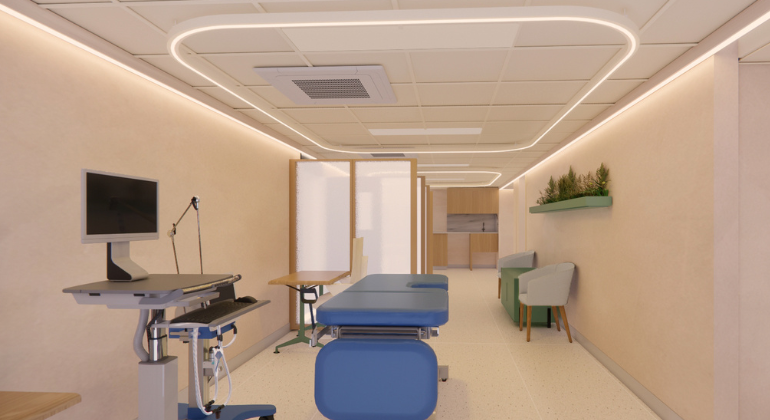
Funding will also be used to design and install a new infection prevention infrastructure at the Cohen Center. This includes adding HEPA filters and germicidal UV devices which rapidly remove viruses and other aerosols from the air.
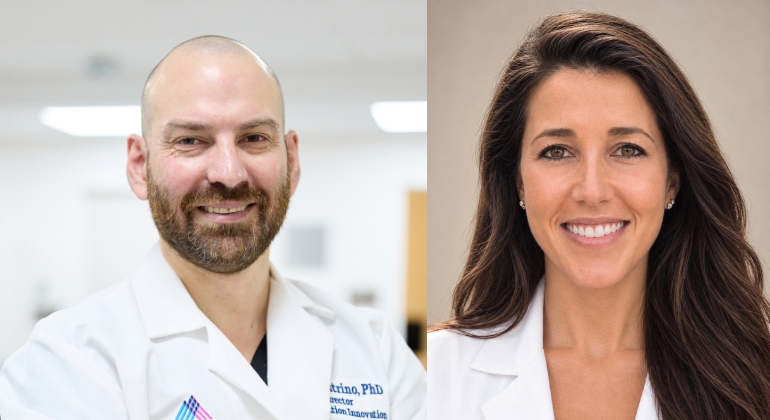
“We have strong evidence to suggest that people who are living with post-acute infection syndromes are more susceptible to opportunistic infections. People with post-acute infection syndromes have the right to access care in spaces where they feel safe and do not have to fear reinfection. It is crucial that we make every effort to protect them from recurrent infections,” says David Putrino, PhD, Professor of Rehabilitation and Human Performance at the Icahn School of Medicine at Mount Sinai and Director of Rehabilitation Innovation for the Mount Sinai Health System.
“The Cohen Center is where much of the major action happens. It’s where we translate long COVID research findings into new potential treatments to help get people better,” says Amy Proal, PhD, President of the PolyBio Research Foundation and the Cohen Center’s Scientific Director. Dr. Proal will help implement the new clinical trials and medical education program.
About the PolyBio Research Foundation and the Long COVID Research Consortium
PolyBio Research Foundation is a 501(c)3 transforming how complex chronic conditions like long COVID, ME/CFS, and long Lyme disease are studied, diagnosed, and treated. The core PolyBio team conceptualizes research projects that identify root cause drivers of these conditions, and build collaborative teams to make the projects a reality. The Long COVID Research Consortium is a global scientific collaboration supported by PolyBio to rapidly and openly study core biological drivers of long COVID. The collaboration includes scientists and clinicians moving rapidly and openly to share ideas and samples across dozens of different institutions, laboratories, and clinics.
About the Mount Sinai Health System
Mount Sinai Health System is one of the nation’s leading integrated academic health systems and one of the largest in the New York metropolitan area. Its comprehensive system includes seven hospitals, more than 400 outpatient practices, over 600 research and clinical laboratories, the Icahn School of Medicine at Mount Sinai, the Graduate School of Biomedical Sciences, and the Mount Sinai Phillips School of Nursing. Together, the Health System comprises approximately 48,000 employees, more than 9,000 physicians, and 8,600 nurses.
As a leading learning health system, Mount Sinai combines clinical expertise with scientific discovery to improve patient care while training the next generation of health care and biomedical leaders. The Health System provides care across every stage of life, from prenatal care through geriatrics, while advancing personalized medicine through artificial intelligence, data science, and biomedical research.
Mount Sinai is consistently recognized among the nation’s leading academic health systems for patient care, research, and education. The Mount Sinai Hospital is ranked No. 1 in New York by Newsweek® and No. 7 in the U.S. on the magazine’s World’s Best Hospitals 2026 list. The Icahn School of Medicine at Mount Sinai ranks No. 9 among U.S. medical schools and No. 1 among freestanding medical schools for National Institutes of Health grant funding, reflecting the strength of its scientific enterprise and leadership in biomedical research.