
Mount Sinai Researcher Receives NCI Grant to Study New Strategies to Prevent Cancer Metastasis
Study will explore mechanisms that enable cancer cells to remain dormant
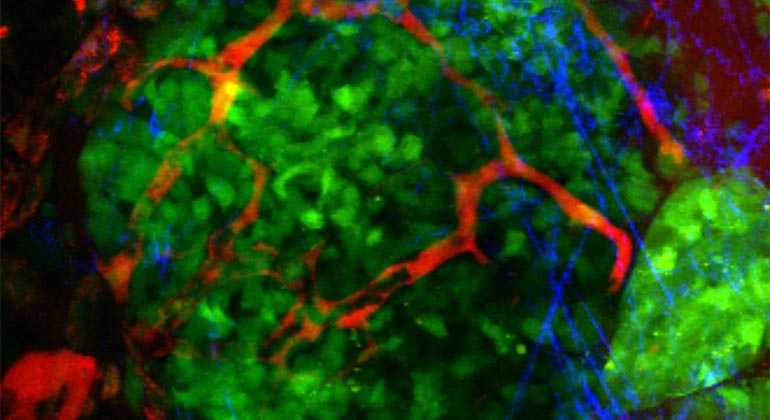
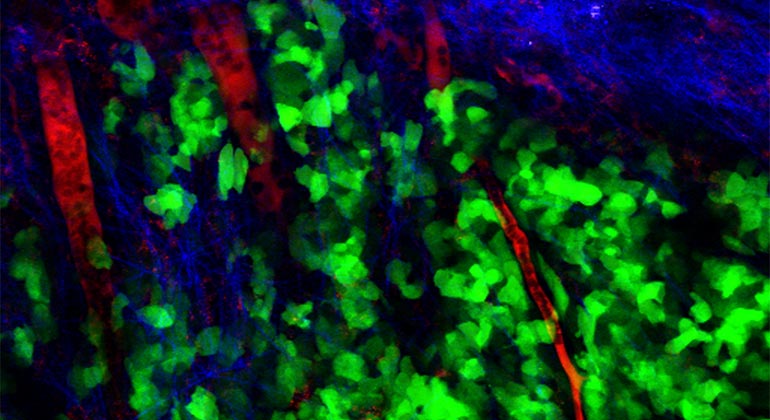
The Tisch Cancer Institute at Mount Sinai has been awarded a $1.9 million grant by the National Cancer Institute for an innovative study that will explore the mechanisms that enable tumor cells to spread from their original site but remain dormant for some time before becoming metastatic and threatening the lives of patients.
Jose Javier Bravo-Cordero, PhD, Assistant Professor of Medicine (Hematology and Medical Oncology) at the Icahn School of Medicine at Mount Sinai, and Scientific Advisor in the Advanced Bioimaging Center at The Tisch Cancer Institute, is the Principal Investigator for this five-year award.
Metastasis—cancer that has spread from its original site to grow in other parts of the body—is the main cause of death among patients with cancer, but the mechanisms involved in this phenomenon are unclear. Disseminated tumor cells, cells that have left the primary tumor and successfully seeded secondary target organs but have not yet formed tumors, have been recognized as crucial in initiating metastasis years or decades after patients have undergone cancer treatment.
This delay in growth is mediated by a process called tumor dormancy, in which tumor cells cease dividing but can be reactivated under the right environmental conditions. These cells are less vulnerable to the immune system and cancer treatments, including chemo and radiation. Studies have shown that tumor cell interactions with the extracellular matrix (ECM)—a molecular network that contributes to the structural integrity and strength of surrounding cells—regulate the hallmarks of cancer from tumor growth to metastasis. However, the role that ECM molecules and receptors play in the dormancy of disseminated tumor cells is unknown, as is whether the tumor cells develop dormancy-supportive niches that sustain them in this state.
“Our hypothesis is that the dormant disseminated tumor cells are constructing a dormancy-supportive ECM niche that is rich in collagen III, an ECM protein,” said Dr. Bravo-Cordero.
“This grant will enable us to better understand the role of collagen III in the construction of these niches at the metastatic organs and define the factors in the tumor ECM microenvironment that contribute to this phenomenon.”
The study will use high-resolution imaging tools combined with dormancy models to study tumor cell-ECM interactions during dormancy. The research team is developing an imaging approach that includes multiphoton imaging and second harmonic generation and activity reporters for dormancy-related genetic pathways.
“Uncovering the mechanisms that regulate dormant cell-ECM interactions will enable us to devise strategies that either prevent the awakening of the disseminated cells or that enable us to kill these cells by targeting the ECM microenvironment, which would result in a significant reduction in the annual number of deaths from metastatic cancers,” Dr. Bravo-Cordero said.
About the Mount Sinai Health System
Mount Sinai Health System is one of the nation’s leading integrated academic health systems and one of the largest in the New York metropolitan area. Its comprehensive system includes seven hospitals, more than 400 outpatient practices, over 600 research and clinical laboratories, the Icahn School of Medicine at Mount Sinai, the Graduate School of Biomedical Sciences, and the Mount Sinai Phillips School of Nursing. Together, the Health System comprises approximately 48,000 employees, more than 9,000 physicians, and 8,600 nurses.
As a leading learning health system, Mount Sinai combines clinical expertise with scientific discovery to improve patient care while training the next generation of health care and biomedical leaders. The Health System provides care across every stage of life, from prenatal care through geriatrics, while advancing personalized medicine through artificial intelligence, data science, and biomedical research.
Mount Sinai is consistently recognized among the nation’s leading academic health systems for patient care, research, and education. The Mount Sinai Hospital is ranked No. 1 in New York by Newsweek and No. 5 on the magazine’s World’s Best Hospitals list. The Icahn School of Medicine at Mount Sinai ranks No. 11 among U.S. medical schools and No. 1 among freestanding medical schools for National Institutes of Health funding, reflecting the strength of its scientific enterprise and leadership in biomedical research.