
Our Treatments and Services
We begin with a thorough evaluation of your condition. may include diagnostic tests, such as an electroencephalogram (EEG) to check for seizure activity, an electromyography (EMG) to evaluate muscle and movement patterns, and comprehensive neurological exams to track changes over time. The next step is to adjust medication and track your progress. If this does not fully relieve your symptoms, we may recommend more advanced options such as neuromodulation. This means we stimulate the brain and its nerves to correct the way they function, similar to how a pacemaker corrects the heartbeat. Additional advanced treatments include:
- Deep brain stimulation: We implant electrodes into the brain and use them to provide electrical stimulation. It is considered an invasive treatment.
- MR-guided focused ultrasound: A non-invasive treatment that uses magnetic resonance imaging to precisely guide powerful sound waves to a specific spot in the brain. There, we use the sound waves to create heat to treat or destroy targeted tissue without surgery.
- Responsive neurostimulation: If the area of your brain that causes seizures is connected to speech or motion, we may implant a neurostimulator that can monitor your brain. When it detects seizure onset, it sends an electric impulse to short-circuit the seizure.
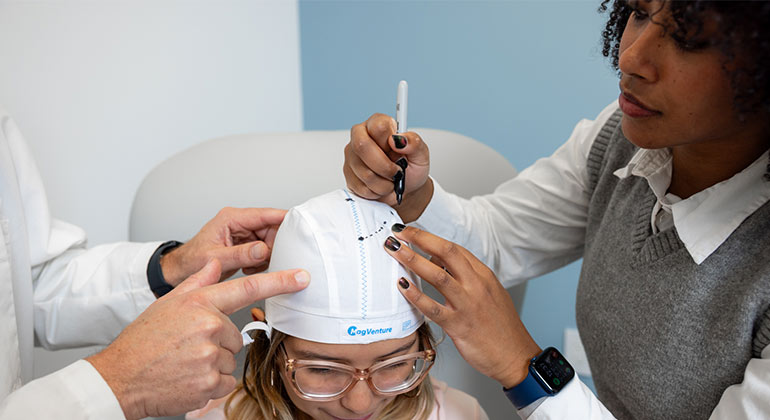
- Transcranial direct current stimulation: With this non-invasive approach, we place two electrodes on the scalp to generate mild electrical stimulation.
- Transcranial magnetic stimulation: We place a coil over the scalp. This coil delivers repeated pulses of magnetic energy impulses to the brain. It is a non-invasive approach.
- Vagus nerve stimulation: We implant a small device under the skin, that does not involve your brain. The simulator generates impulses that we can use for seizures, stroke rehabilitation, or major depression.
Services We Offer
We also offer additional neurosurgical services:
- Pain management: For pain that does not respond to other types of treatment, neuromodulation can help. It corrects the system of nerves much the way a pacemaker corrects the heartbeat. We implant a device called a neurostimulator into your brain. Then we send electrical impulses to the spinal cord, nerves, and brain. This alters the body’s pain signals as they head toward the brain.
- Stroke rehabilitation: If you have ever had a stroke—even as long as a decade or more ago—vagus nerve stimulation can help. We implant small electrodes into your chest and use them to send electrical currents to the brain. These currents help the body develop new routes within the brain while you exercise. Often, this approach means people can regain use of their hand or arm.
- Pediatric neurosurgery: Our neurosurgeons have extensive experience in treating children of all ages.
- Second opinions: We can review your medical records and provide a fresh interpretation of your diagnosis and treatment plan. Second opinions can help you make decisions about treatment options. People often seek second opinions when they have a complex illness or are facing major treatment, such as surgery.