
Spinal Vascular Malformations and Lesions
What Are Spinal Vascular Malformations and Lesions?
Spinal vascular anomalies are an abnormal connection of blood vessels within or around the spinal cord. These rare conditions disrupt normal blood flow and can damage the spinal cord if left untreated.
Normally, blood flows easily from arteries (blood vessels that carry oxygen-rich blood away from the heart) to tiny blood vessels called capillaries, and then into veins (blood vessels that carry blood back to the heart). In spinal vascular malformations, these blood vessels didn't develop normally, causing them to become tangled on, near, or in the spinal cord or in the surrounding tissues. Over time, this can lead to bleeding, rupturing, or permanent damage to the spinal cord and surrounding structures.
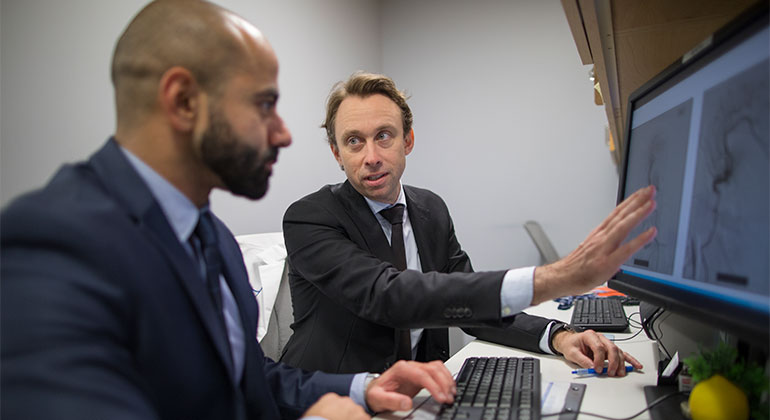
The Cerebrovascular Center at Mount Sinai brings together a dedicated team of multidisciplinary vascular surgeons, radiologists, advanced practice providers, nurses, and support staff who evaluate and treat the most complex spinal vascular malformations. The Spinal Vascular Malformations and Lesions Program at Mount Sinai is led by Reade A. De Leacy, MD, an expert in interventional neuroradiology and minimally invasive neurovascular therapies.
Symptoms
Because symptoms often look like more common spine conditions, spinal vascular malformations may go undiagnosed for months or even years. Symptoms often develop gradually but may also happen suddenly due to hemorrhaging (heavy or uncontrollable bleeding). Early diagnosis is essential in preventing permanent spinal cord damage. Patients commonly experience:
- Increasing leg weakness
- Difficulty walking
- Numbness and tingling in the legs
- Back pain
- Balance or coordination problems
- Bowel or bladder problems
- Sexual dysfunction
- Sudden or rapidly worsening neurological symptoms
Conditions
Our cerebrovascular team evaluates and treats the full spectrum of spinal vascular disorders, including:
- Spinal dural arteriovenous fistulas
- Perimedullary arteriovenous fistulas
- Intramedullary arteriovenous malformations (Spinal AVMs)
- Juvenile/complex spinal AVMs
- Epidural arteriovenous fistulas
- Vascular causes of progressive myelopathy
- Spinal cord venous congestion syndromes
Diagnosis
Because these conditions may initially be misdiagnosed as spinal stenosis (narrowing of the spinal canal), general nerve pain, neuropathy (nerve damage), or even multiple sclerosis, specialized imaging is essential for an accurate diagnosis. At Mount Sinai’s Spinal Vascular Malformations and Lesions Program, we have the most advanced imaging and diagnostic equipment to specifically evaluate the spine’s vascular system. We utilize:
- Magnetic Resonance Imaging (MRI): Uses magnets and radio waves to create detailed pictures of the spinal cord and can show swelling or abnormal blood vessels.
- Spinal Angiography: A specialized imaging test that uses contrast dye and X-rays to create a detailed map of the blood vessels in the spine.
- CT Angiography (CTA): A noninvasive imaging test that uses contrast dye and a CT scan to create detailed images of the blood vessels in and around the spine.
Treatment Options
After using precise imaging to locate and diagnose the vascular anomaly, the multidisciplinary team at the Cerebrovascular Center meets to determine the safest, most effective course of treatment for each individual patient. The team includes dedicated vascular neurointerventional radiologists, vascular neurosurgeons, endovascular neurologists, and neurophysiologists.
Monitoring: For some patients, monitoring may be the best approach. Our team will provide ongoing surveillance to watch for any changes in your vascular malformation.
Minimally Invasive Treatments: Most patients can be treated using embolization. During this procedure, a doctor guides a thin tube called a catheter through the blood vessels to the abnormal area and blocks the unhealthy blood flow.
Surgery: Some spinal vascular malformations are best treated with surgery. Vascular neurosurgeons work with interventional specialists to choose the safest approach for each patient.
Ongoing Management and Follow-up
Your care doesn’t end after treatment. Our team continues to monitor your recovery, arranging follow-up visits and imaging tests to make sure your vascular malformation remains stable. Video visits are available for follow-up appointments.