
Reducing High-Impact Waste Streams
Mount Sinai has a longstanding program to reduce the environmental impact of waste across our hospitals, research facilities, and clinical spaces. Through a combination of education, innovation, and collaboration, Mount Sinai has been implementing strategies that target high-impact areas and reduce waste overall. Hazardous and regulated medical waste are particularly carbon-intensive, so they continue to be a high priority for the Health System. Staff education and engagement on the importance of proper waste segregation has reduced unnecessary hazardous and regulated medical waste generated across our campuses.
Strategies for Recycling
We have transitioned to more sustainable collections’ container materials which are reusable in place of disposable sharps containers, and soft bags instead of single use hard plastic bins for trace chemotherapeutic waste. These changes decrease our environmental impact, and we continue to investigate new avenues to reduce medical and hazardous waste streams.
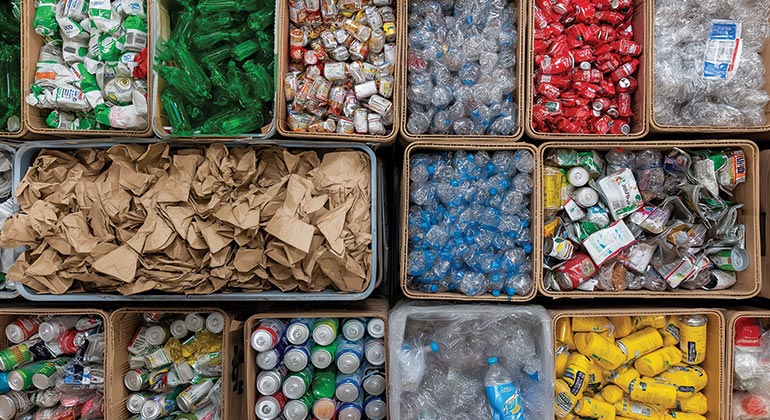
Mount Sinai has an active perioperative recycling program to divert materials from landfill that can be recycled. Staff education also plays a key role in the success of these efforts, which is why waste signage has been updated to improve waste segregation practices, and staff-led, department-specific, recycling initiatives have been identified.
Key waste reduction programs include:
- Improved cardboard collections
- Expanded electronic waste recycling program
- Recycling confidential waste through a local vendor
- Ethanol recycling and hazardous waste reduction in clinical labs
- Collection of printer toner cartridges for recycling
Mount Sinai has initiated several pilot programs at major campuses that help make meaningful progress towards our recycling goals, including:
- At The Mount Sinai Hospital, new protocols in the OR have driven improvements in the hospital’s overall recycling volume. This successful pilot led our other hospital sites to launch their own OR recycling programs.
- Composting of kitchen food scraps is another pilot program at Mount Sinai Morningside. Food scraps are placed in a designated container to be picked up daily and undergo commercial composting. This program is expected to be expanded to other hospital kitchens soon.
- Donation of non-usable medical supplies, equipment, and furniture has also expanded through partnership with local non-profit organizations. In 2024, Mount Sinai Queens and the New York Eye and Ear Infirmary of Mount Sinai donated 10,000 pounds in supplies to the Global Surgery Team at an ambulatory surgical center in Uganda. Green Team members play a key role in collecting items for donation.
Research Lab Decarbonization
The sustainability team is working closely with research operations to identify lab-specific sustainability initiatives and areas for improvement. The Laboratory Safety Committee now has a Sustainability Subcommittee and all Principal Investigators and lab staff are engaged in identifying and developing waste reduction projects. Waste is a major area of focus because labs generate a considerable amount of hazardous waste onsite. Regular summary reports are presented to lab safety, research, and sustainability leadership to track waste minimization and associated greenhouse gas reduction efforts.
Sustainable Transportation
We understand that our ambulances, employee shuttles, and passenger vehicles all contribute to our carbon footprint. As a Health System, we are investigating renewable and cleaner energy sources to fuel our vehicles.
Our commitment to sustainable transportation practices extends to our employees who have access to bike storage onsite at every hospital campus, and bike-share programs are available near all Mount Sinai hospitals. Public transportation is readily accessible and reliable at each Mount Sinai location, and staff are encouraged to utilize it with a pre-tax commuter benefit program. Mount Sinai further supports cleaner transportation by incentivizing staff use of electric vehicles. To that end, we have retrofitted some of our employee parking lots, equipping them with 33 EV charging stations, which are subsidized and are free of charge for employees. We plan on expanding EV charging stations across our entire Health System to increase accessibility to our staff, patients, and visitors.
Finally, carpooling to and from work is encouraged. Click here to find ridesharing options available in your area.