
Helping Patients Get the Right Referrals, Faster
Each day, 30 to 40 referrals from the Mount Sinai Queens Emergency Department landed in the work queue at Mount Sinai Doctors-Astoria. Many called for investigation of issues with insurance, the diagnoses, or whether the specialty was offered at the practice. The busy front desk staff had to take on this task while managing their other responsibilities.
Today, that volume is down to about 10 referrals a day. The reduction stems from an initiative launched in early 2026 that brought together Emergency Medicine, Access Management, the Digital and Technology Partners (DTP) team, and clinic staff. Together, they addressed a backlog that had grown to as many as 400 referrals. By June 2026, there was only one referral in the queue that needed reconciliation. And in July there were none.
Behind the numbers are patients who need prompt follow-up care.
The Challenge: A Backlog of Patient Referrals
“Patient care is No. 1,” says Carla Moscoso, Senior Director, Queens Network Practices, who oversees the management and routing of incoming referrals. “Some of these referrals are urgent, especially those coming from the emergency room, and patients may need follow-up care within two or three days.”
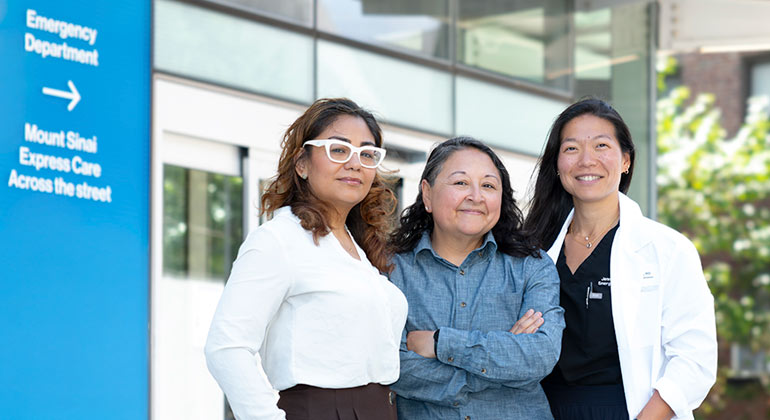
In response to the backlog, a useful tool was created: a referral triage guide. This is a frequently updated cheat sheet of practices, the specialties they provide, and the insurances they take, to help get patients referred to the right practices, faster. The guide was created by a team working closely across roles and locations: Ms. Moscoso, Jenny Chang, MD, Assistant Medical Director of the Mount Sinai Queens Emergency Department, and Veronica Bravo, Access Manager for Ambulatory Capacity Management and Access. Together, they educated staff, investigated recurring errors, and updated Epic referral lists.
The team shared a proactive approach to operational issues. “This isn’t a Band-Aid fix,” Ms. Moscoso says. “We needed to find the root cause, and we needed to put a plan in place.”
The Solution: A Triage Guide, and Teamwork
Dr. Chang attributes the progress to relationships that were built among the teams, even before the workflows changed. Once these lines of communication were in place, Ms. Moscoso at Astoria and Ms. Bravo in Access Management could alert the Emergency Department to rejected or misplaced referrals, allowing clinicians to trace what went wrong and correct it.
“No provider wants a referral to go to the wrong place,” Dr. Chang says. “Every referral we place means we want the patient to receive the proper care. If the referral does not go through or is delayed, patient care is delayed.”
The group has eliminated at least one recurring source of returned referrals. The problem involved breast surgery cases in which patients with lumps or abscesses needed routine imaging before an appointment could be scheduled. Because the Emergency Department does not typically perform that imaging, the referral bounced back for further action.
To prevent this kind of delay, Emergency Medicine, Access Management, and DTP revised the referral order to ask right away whether imaging had been completed. If not, clinicians are directed to refer the patient first to gynecology or primary care. Ms. Bravo says breast surgery referrals that once required repeated redirection have largely stopped. “When a referral reaches staff with the correct diagnosis and order, they can schedule it in real time and contact the patient,” she says. “That leads to quicker appointments.”
The teams continue to review work queues and refine referral guidance. Ms. Moscoso checks the queues daily and updates the triage guide as services and insurance requirements change. Ms. Bravo conducts monthly staff refreshers and quarterly list reviews, while Dr. Chang raises recurring concerns with Emergency Department clinicians.
“The health care system can be very difficult to navigate,” Dr. Chang says. “When we identify and mitigate an issue like this, patients feel some relief, and our providers feel reassured that they are getting the proper care they need.”
We are Mount Sinai, continuously improving a vital process.