
Napoleone Ferrara, MD, Receives 2026 Yergin Family International Prize for Biomedical Research
UC San Diego physician-scientist recognized for discovery that led to treatments for cancer and blinding eye diseases
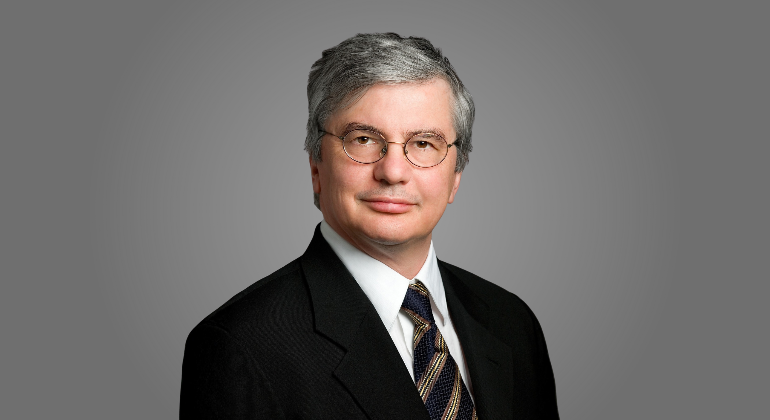
Napoleone Ferrara, MD, 2026 Yergin Family International Prize for Biomedical Research recipient. Photo credit: University of California San Diego School of Medicine
The Icahn School of Medicine at Mount Sinai will award its 2026 Yergin Family International Prize for Biomedical Research to Napoleone Ferrara, MD, Distinguished Professor of Pathology and Hildyard Endowed Chair in Eye Disease at the University of California San Diego School of Medicine. The award honors his discovery of vascular endothelial growth factor (VEGF), a molecule that plays a central role in the growth of blood vessels.
The prize, which has been renamed this year in recognition of the Yergin family’s longstanding support, was previously known as the Yergin-New International Prize for Biomedical Research. It commemorates Maria I. New, MD, a groundbreaking Mount Sinai pediatric endocrinologist who passed away in 2024.
Dr. Ferrara’s research established VEGF as a key driver of abnormal blood vessel growth in cancer and several blinding eye diseases, leading to treatments that have benefited millions of patients worldwide. He will receive a $50,000 award and deliver the Yergin Family Distinguished Lecture during a ceremony to be held at Mount Sinai in New York City on Wednesday, November 18.
In 1989, Dr. Ferrara and his colleagues isolated and cloned VEGF, helping identify the biological signal that causes new blood vessels to grow. His subsequent research showed that while VEGF is essential for normal blood-vessel development, excessive VEGF activity can also contribute to disease.
Dr. Ferrara’s laboratory then demonstrated that blocking VEGF could slow tumor growth. This work led to the development of bevacizumab, an antibody that blocks VEGF and became the first anti-angiogenic cancer treatment approved by the U.S. Food and Drug Administration, in 2004, for metastatic colorectal cancer. Anti-VEGF therapies are now part of standard treatment for several cancers, including colorectal, kidney, lung, cervical, and ovarian. Combinations of anti-VEGF drugs with immunotherapy are today standard of care for treatment of hepatocellular carcinoma.
The discovery also opened a new path for treating diseases in which abnormal blood vessel growth damages the eye. Dr. Ferrara and his collaborators showed that VEGF plays a key role in conditions including neovascular age-related macular degeneration, diabetic retinopathy, and other retinal diseases. Their work led to the development of ranibizumab and helped establish anti-VEGF treatment as a standard of care for several serious eye disorders, enabling many patients to preserve or improve their vision.
Dr. Ferrara, a member of the National Academy of Sciences and National Academy of Medicine, has received numerous honors for his research, including the 2010 Lasker-DeBakey Clinical Medical Research Award, the 2013 Breakthrough Prize in Life Sciences, and the 2014 Canada Gairdner International Award.
“Dr. Ferrara’s work is a remarkable example of how a fundamental discovery in biology can change the course of medicine,” said Mone Zaidi, MD, PhD, MACP, Director of Mount Sinai’s Institute for Translational Medicine and Pharmacology and Mount Sinai Professor of Clinical Medicine at the Icahn School of Medicine. “By identifying VEGF and demonstrating its role in blood-vessel growth, he opened the door to treatments that have changed outcomes for patients with cancer and serious eye diseases around the world.”
Dr. Ferrara’s research continues to explore VEGF and other pathways involved in blood vessel growth. His laboratory is developing longer-lasting treatments that could reduce the frequency of injections needed by patients with retinal diseases and is investigating new approaches to geographic atrophy, an advanced form of age-related macular degeneration for which treatment options remain limited.
“Napoleone Ferrara’s discovery demonstrates the extraordinary impact that fundamental biomedical research can have on human health,” said Pulitzer Prize-winning author and economic historian Daniel Yergin, PhD, who, along with his wife, foreign policy expert Angela Stent, PhD, endowed the prize. “His work has transformed the treatment of cancer and blinding eye diseases and continues to influence the development of new therapies.”
The Yergin Family International Prize for Biomedical Research recognizes distinguished physician-scientists for lifetime scientific achievements that have led, or may lead, to new ways to prevent and treat human disease.
The Prize, now in its fifth year, has become recognized as one of the foremost international awards in medical research, and its institutional home underscores Mount Sinai’s longstanding commitment to innovation that impacts human health.
“We first established this annual biomedical research award in recognition of Dr. New and her extraordinary legacy and are inspired by Daniel Yergin’s and Angela Stent’s vision to enable this award program to live in perpetuity,” said Eric J. Nestler, MD, PhD, Nash Family Professor of Neuroscience, Anne and Joel Ehrenkranz Dean of the Icahn School of Medicine at Mount Sinai, and Executive Vice President and Chief Scientific Officer of the Mount Sinai Health System. “Dr. Ferrara’s achievements reflect the lasting impact of research that begins with fundamental questions and ultimately changes the way diseases are treated.”
The prize winners are selected by an international jury of distinguished physician-scientists, chaired by Dr. Zaidi. The 2026 jury members are Nobel laureate Aaron Ciechanover, MD, DSc, Distinguished University Professor at The Rappaport Family Technion Integrated Cancer Center in Haifa, Israel; Nancy Andrews, MD, PhD, Executive Vice President and Chief Scientific Officer at Boston Children’s Hospital; Michael J. Welsh, Roy J. Carver Professor of Internal Medicine and Molecular Physiology and Director of the Cystic Fibrosis Research Center and Pappajohn Biomedical Institute at the University of Iowa; Jeffrey Friedman, MD, Marilyn M. Simpson Professor and Head of the Laboratory of Molecular Genetics at The Rockefeller University and Investigator of the Howard Hughes Medical Institute; and Anna Wedell, MD, PhD, Professor of Medical Genetics in the Department of Molecular Medicine and Surgery at the Karolinska Institutet in Stockholm, Sweden.
“We are grateful to the distinguished members of the international jury for dedicating their time and expertise to reviewing this year’s exceptional group of nominees and selecting Dr. Ferrara as the recipient,” Dr. Zaidi said.
The Yergin Family International Prize for Biomedical Research is administered by Mount Sinai’s Institute for Translational Medicine and Pharmacology, under the leadership of Dr. Zaidi.
About the Yergin Family International Prize for Biomedical Research
The Yergin Family International Prize for Biomedical Research was created to honor the esteemed career of Maria I. New, MD, one of the world’s foremost pediatricians and a beloved member of the Mount Sinai community. The prize is awarded annually to distinguished physician-scientist for lifetime scientific achievements that have led, or may lead to, new ways to prevent and treat human disease.
The award is generously endowed by Pulitzer Prize-winning author and economic historian Daniel Yergin, PhD, and his wife, foreign policy expert Angela Stent, PhD.
Maria I. New, MD, Biography
Over the course of more than six decades, Maria I. New, MD, earned a reputation as one of the nation’s leading pediatric endocrinologists. Her research on congenital adrenal hyperplasia led to treatments that could correct the disorder before birth. Her identification of a form of hypertension known as apparent mineralocorticoid excess also opened a new area of receptor biology.
After joining the Icahn School of Medicine at Mount Sinai in 2004, Dr. New continued her work as a Professor of Pediatrics and Genetics and Genomic Sciences and as Founding Director of Mount Sinai’s Adrenal Steroid Disorders Program. A member of the National Academy of Sciences and several other prestigious academies, Dr. New demonstrated a lifelong commitment to biomedical research and clinical care and trained a generation of pediatricians and endocrinologists.
About the Icahn School of Medicine at Mount Sinai
The Icahn School of Medicine at Mount Sinai is internationally renowned for its outstanding research, educational, and clinical care programs. It is the sole academic partner for the seven member hospitals* of the Mount Sinai Health System, one of the largest academic health systems in the United States, providing care to New York City’s large and diverse patient population.
The Icahn School of Medicine at Mount Sinai offers highly competitive MD, PhD, MD-PhD, and master’s degree programs, with enrollment of more than 1,200 students. It has the largest graduate medical education program in the country, with more than 2,700 clinical residents and fellows training throughout the Health System. The Graduate School of Biomedical Sciences offers 13 degree-granting programs, conducts innovative basic and translational research, and trains more than 470 postdoctoral research fellows.
Ranked 11th nationwide in National Institutes of Health (NIH) funding, the Icahn School of Medicine at Mount Sinai is among the 90th percentile of U.S. private medical schools in Sponsored Programs Direct Expenditures per Principal Investigator, according to the Association of American Medical Colleges. More than 6,900 scientists, educators, and clinicians work within and across dozens of academic departments and multidisciplinary institutes with an emphasis on translational research and therapeutics. Through Mount Sinai Innovation Partners (MSIP), the Health System facilitates the real-world application and commercialization of medical breakthroughs made at Mount Sinai.
-------------------------------------------------------
* Mount Sinai Health System member hospitals: The Mount Sinai Hospital; Mount Sinai Brooklyn; Mount Sinai Morningside; Mount Sinai Queens; Mount Sinai South Nassau; Mount Sinai West; and New York Eye and Ear Infirmary of Mount Sinai.
About the Mount Sinai Health System
Mount Sinai Health System is one of the nation’s leading integrated academic health systems and one of the largest in the New York metropolitan area. Its comprehensive system includes seven hospitals, more than 400 outpatient practices, over 600 research and clinical laboratories, the Icahn School of Medicine at Mount Sinai, the Graduate School of Biomedical Sciences, and the Mount Sinai Phillips School of Nursing. Together, the Health System comprises approximately 48,000 employees, more than 9,000 physicians, and 8,600 nurses.
As a leading learning health system, Mount Sinai combines clinical expertise with scientific discovery to improve patient care while training the next generation of health care and biomedical leaders. The Health System provides care across every stage of life, from prenatal care through geriatrics, while advancing personalized medicine through artificial intelligence, data science, and biomedical research.
Mount Sinai is consistently recognized among the nation’s leading academic health systems for patient care, research, and education. The Mount Sinai Hospital is ranked No. 1 in New York by Newsweek® and No. 7 in the U.S. on the magazine’s World’s Best Hospitals 2026 list. The Icahn School of Medicine at Mount Sinai ranks No. 9 among U.S. medical schools and No. 1 among freestanding medical schools for National Institutes of Health grant funding, reflecting the strength of its scientific enterprise and leadership in biomedical research.