
Rhabdomyolysis
Rhabdomyolysis is the breakdown of muscle tissue that leads to the release of muscle fiber contents into the blood. These substances are harmful to the kidney and often cause kidney damage.
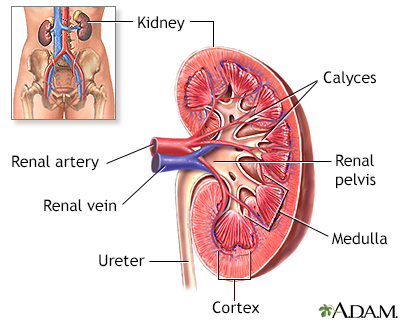
The kidneys are responsible for removing wastes from the body, regulating electrolyte balance and blood pressure, and the stimulation of red blood cell production.
Causes
When muscle is damaged, a protein called myoglobin is released into the bloodstream. It is then filtered out of the body by the kidneys. Myoglobin breaks down into substances that can damage kidney cells.
Rhabdomyolysis may be caused by injury or any other condition that damages skeletal muscle.
Problems that may lead to this disease include:
- Trauma or crush injuries
- Use of drugs or medicines such as cocaine, amphetamines, statins, heroin, or PCP
- Genetic muscle diseases
- Extremes of body temperature
- Ischemia or death of muscle tissue
- Low phosphate levels
- Seizures or muscle tremors
- Severe exertion, such as marathon running or calisthenics
- Lengthy surgical procedures
- Severe dehydration
Symptoms
Exams and Tests
A physical exam will show tender or damaged skeletal muscles.
The following tests may be done:
- Creatine kinase (CK) level
- Serum calcium
- Serum myoglobin
- Serum potassium
- Urinalysis
- Urine myoglobin test
This disease may also affect the results of the following tests:
Treatment
You will need to get fluids containing bicarbonate to help prevent kidney damage. You may need to get fluids through a vein (IV). Some people may need kidney dialysis.
Your health care provider may prescribe medicines including diuretics and bicarbonate (if there is enough urine output).
Hyperkalemia and low blood calcium levels (hypocalcemia) should be treated right away. Kidney failure should also be treated.
Outlook (Prognosis)
The outcome depends on the amount of kidney damage. Acute kidney failure occurs in many people. Getting treated soon after rhabdomyolysis will reduce the risk of permanent kidney damage.
People with milder cases may return to their normal activities within a few weeks to a month. However, some people continue to have problems with fatigue and muscle pain.
Possible Complications
Complications may include:
- Acute tubular necrosis
- Acute renal failure
- Harmful chemical imbalances in the blood
- Shock (low blood pressure)
When to Contact a Medical Professional
Contact your provider if you have symptoms of rhabdomyolysis.
Prevention
Rhabdomyolysis can be avoided by:
- Avoiding drugs or medicines that may cause rhabdomyolysis.
- Drinking plenty of fluids after strenuous exercise.
- Removing extra clothes and immersing the body in cold water in case of heat stroke.
References
Long B, Koyfman A. Rhabdomyolysis. In: Walls RM, ed. Rosen's Emergency Medicine: Concepts and Clinical Practice. 10th ed. Philadelphia, PA: Elsevier; 2023:chap 116.
O'Connor FG, Deuster PA. Rhabdomyolysis. In: Goldman L, Cooney KA, eds. Goldman-Cecil Medicine. 27th ed. Philadelphia, PA: Elsevier; 2024:chap 99.
Paine CH, Jefferson JA, Velez JCQ. Pathophysiology and etiology of acute kidney injury. In: Johnson RJ, Floege J, Tonelli M, eds. Comprehensive Clinical Nephrology. 7th ed. Philadelphia, PA: Elsevier; 2024:chap 70.
Version Info
Last reviewed on: 8/28/2023
Reviewed by: Walead Latif, MD, Nephrologist and Clinical Associate Professor, Rutgers Medical School, Newark, NJ. Review provided by VeriMed Healthcare Network. Also reviewed by David C. Dugdale, MD, Medical Director, Brenda Conaway, Editorial Director, and the A.D.A.M. Editorial team.
