

Colon and Rectal Cancer
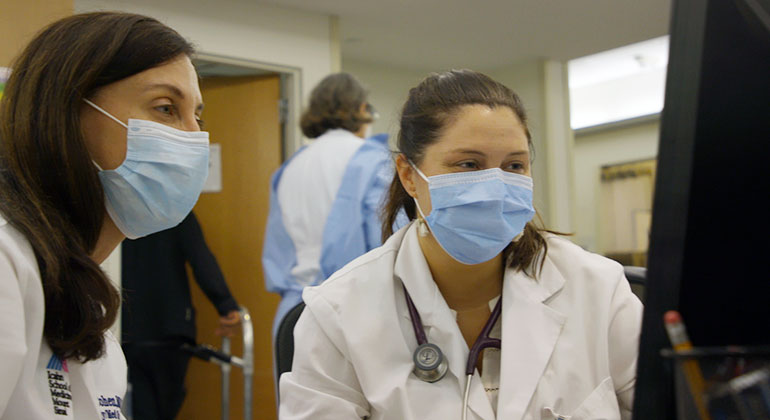
The Tisch Cancer Institute at Mount Sinai Medical Center takes a patient-centered approach to diagnosing and treating all cancers, including colon and rectal (colorectal) cancer. Our multidisciplinary team includes medical oncologists, surgeons, radiation oncologists, and researchers, as well as specialized nurses, dietitians, and social workers, who are dedicated to providing our patients with the best possible care. Our physicians have experience in all aspects of colon and rectal cancer, from screening and diagnosis to treatment and follow-up care. Each specialist coordinates with the others to create a comprehensive, individualized approach to each patient’s needs.
One of the world’s premier academic medical centers, Mount Sinai’s level of experience and care in treating patients with colon and rectal cancers is superior. We are engaged in a broad range of clinical and basic cancer research, which can ultimately lead to better cancer prevention, detection and treatment. We are able to provide our patients with the latest advances in patient care, as well as access to the newest therapies through clinical trials. Our medical oncologists who see colon and rectal cancer patients are specialists in GI (gastrointestinal) cancers. We have extensive expertise in patients who have IBD (inflammatory bowel disease), including surgeons who have trained specifically in surgery for patients with IBD. We also have surgical oncologists who specialize in resection of colon tumors and metastatic disease in the liver. Our thoracic surgeons have expertise in operating on metastatic colon or rectal cancer that has spread to the lungs. Although most colon and rectal cancer patients are over the age of 50, we also see younger patients who need specialized, aggressive therapy.
About Colon and Rectal Cancer
Colon cancers are cancers that form in the colon (the longest portion of the large intestine or large bowel), while rectal cancers form in the rectum (the last part of the large intestine). These cancers (also called colorectal or large bowel cancer) occur when cells in the body divide out of control, forming tumors. Both men and women may be diagnosed with colon or rectal cancer.
According to the National Cancer Institute, more than 102,000 new cases of colon cancer and 40,000 cases of rectal cancer will be diagnosed in the U.S. in 2013. Colon and rectal cancer is the third most common cancer diagnosis in the U.S. (excluding non-melanoma skin cancers).
Risk Factors
There is no way to know for certain if you will develop colon or rectal cancer. However, a variety of factors may increase your risk for cancer of the colon and rectum, including if you:
- Are over the age of 50. The risk of cancer of the colon and rectum increases with age.
- Have a family history (a close relative including parents, brothers, sisters, or children) who has had colon or rectal cancer
- Have had inflammatory bowel disease (IBD)
- Smoke cigarettes
See our Health Library for an overview of colon cancer and rectal cancer.
Tel: 212-241-6756
(Medical Oncology)
Tel: 212-241-3547
(Colonoscopies and Surgeries)
Thanks to Dr. Holcombe’s recommendation to try chemotherapy pills, Sandra has been able to lead an active professional and social life. Read more.

