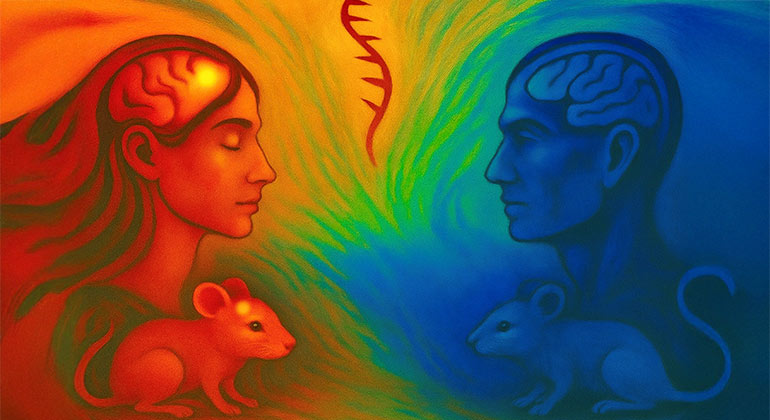
"Early Life Stress Can Change Genes In The Brain" - Samuel Bavor
According to a new study from the Icahn School of Medicine at Mount Sinai, stress experienced early in the critical development of a mouse sets it up for an extra sensitivity to stressors due to genetic changes in the part of the brain responsible for mood. The study centered on how gene’s action changes due to certain regulatory molecules versus inherited DNA alone, a field of study called epigenetics. These molecules control the timing, placement, and degree of gene activation and are determined by a number of factors. “This mouse paradigm will be useful for understanding the molecular correlates of increased risk of depression resulting from early life stress and could pave the way to look for such sensitive windows in human studies,” said Eric Nestler, MD, PhD, dean for academic and scientific affairs and director of the Friedman Brain Institute at the Icahn School of Medicine at Mount Sinai.
- Eric Nestler, MD, PhD, Dean, Academic and Scientific Affairs, Director, Friedman Brain Institute, Professor, Neuroscience, Pharmacological Sciences, Psychiatry, Icahn School of Medicine at Mount Sinai

Scott J. Russo, PhD, Appointed Chair of the Nash Family Department of Neuroscience
Oct 13, 2026 View All Press Releases
Eva A. Mistry, MBBS, MSCI, FAHA, Appointed Mount Sinai Health System Chair of Neurology
Sep 09, 2026 View All Press Releases
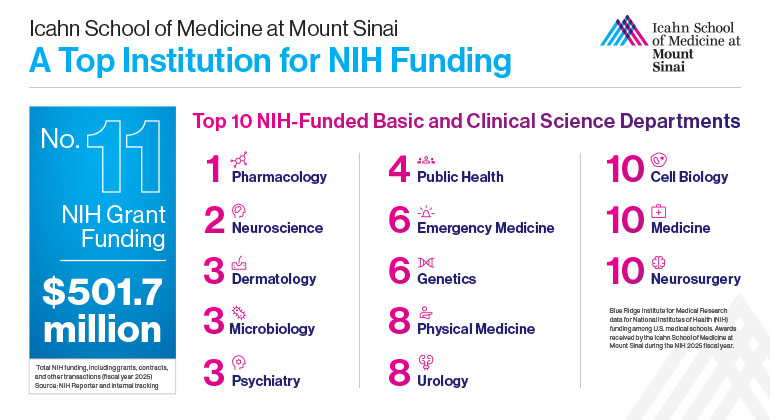
Icahn School of Medicine at Mount Sinai Remains Among Top Institutions for NIH Funding
Mar 05, 2026 View All Press Releases