
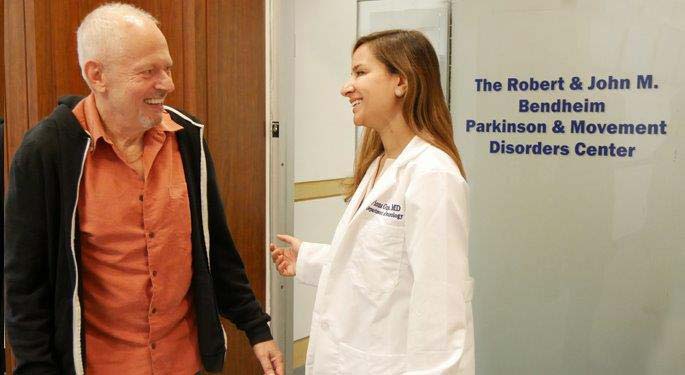
Robert and John M. Bendheim Parkinson and Movement Disorder Center
At the Robert and John M. Bendheim Parkinson and Movement Disorder Center, we understand the particular challenges our patients face and are skilled in providing the answers, leading-edge therapies, and personal support you need to achieve the best possible health. Our experts specialize in the diagnosis and treatment of both hypokinetic (involving slowed motion) and hyperkinetic (involving excessive motion) disorders, including Parkinson’s disease, dystonia, tremor disorders, Huntington’s disease, tic disorders, and spasticity.
Recognizing that each patient is different, we take the time to establish a relationship with you and your family to personalize the right therapies for your individual needs. From consultation and diagnosis through medical management and follow-up, our multidisciplinary approach brings specialists in neurosurgery, psychiatry, rehabilitation, neuropsychology, and social work together to ensure you receive the most comprehensive care possible.
Our commitment to providing you with the best medicine means we are constantly striving to improve the treatment choices we offer. That’s why we are involved with large science and clinical research programs that seek to understand the causes of movement disorders and discover new and better ways to treat them. Through this blend of science and personalized attention, our Center is positioned to provide you with the care you need to achieve the best possible long-term health.