
Fungal nail infection
Nails - fungal infection; Onychomycosis; Tinea unguium
Fungal nail infection is a fungus growing in and around your fingernail or toenail.
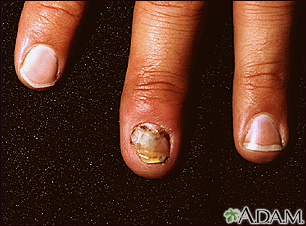
A paronychia is an infection around the nail. Many organisms can cause a paronychia. This particular case is caused by the yeast-like organism Candida. Note the inflammation (red, swollen area) at the base of the nail and the changes that are apparent in the nail itself.
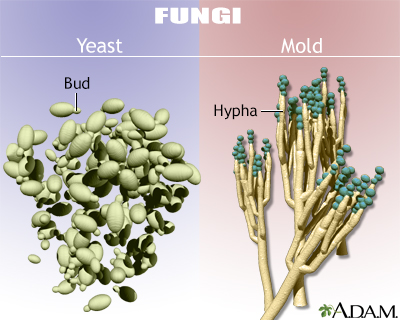
Mold and yeast are two types of fungus. Both can cause allergic reactions. Fungal spores can circulate in the air and may cause allergic rhinitis when inhaled.
Causes
Fungi can live on the dead tissues of the hair, nails, and outer skin layers.
Common fungal infections include:
- Athlete's foot
- Jock itch
- Ringworm on the skin of the body or head
Fungal nail infections often start after a fungal infection on the feet. They occur more often in toenails than in fingernails. They are most often seen in adults as they age.
You are at higher risk of getting a fungal nail infection if you have any of the following:
- Diabetes
- Peripheral vascular disease
- Peripheral neuropathies
- Minor skin or nail injuries
- Deformed nail or nail disease
- Moist skin for a long time
- Immune system problems
- Family history
- Wear footwear that does not allow air to reach your feet
Symptoms
Symptoms include nail changes on one or more nails (usually toenails), such as:
- Brittleness
- Change in nail shape
- Crumbling of the outside edges of the nail
- Debris trapped under the nail
- Loosening or lifting of the nail
- Loss of luster and shine on the nail surface
- Thickening of the nail
- White or yellow streaks on the side of the nail
Exams and Tests
Your health care provider will examine your nails to find out if you have a fungal infection.
The diagnosis can be confirmed by looking at scrapings from the nail under a microscope. This can help determine the type of fungus. Samples can also be sent to a lab for a culture. (Results may take 4 to 6 weeks.)
Treatment
Over-the-counter creams and ointments usually do not help treat this condition.
Prescription antifungal medicines that you take by mouth may help clear the fungus.
- You will need to take the medicine for about 2 to 3 months for toenails; a shorter time for fingernails.
- Your provider will do lab tests to check for liver damage while you are taking these medicines.
Laser treatments may sometimes get rid of the fungus in the nails. This is less effective than medicines.
In some cases, you may need to have the nail removed.
Outlook (Prognosis)
The fungal nail infection is cured by the growth of new, non-infected nails. Nails grow slowly. Even if treatment is successful, it may take up to a year for a new clear nail to grow.
Fungal nail infections may be hard to treat. Medicines clear up fungus in about one half of the people who try them.
Even when treatment works, the fungus may return.
When to Contact a Medical Professional
Contact your provider if:
- You have fungal nail infections that do not go away
- Your fingers become painful, red, or drain pus
Prevention
Good general health and hygiene help prevent fungal infections.
- Do not share tools used for manicures and pedicures.
- Keep your skin clean and dry.
- Take proper care of your nails.
- Wash and dry your hands thoroughly after touching any kind of fungal infection.
References
Dinulos JGH. Nail diseases. In: Dinulos JGH, ed. Habif's Clinical Dermatology. 7th ed. Philadelphia, PA: Elsevier; 2021:chap 25.
Elewski BE, Hughey LC, Hunt KM, Hay RJ. Fungal diseases. In: Bolognia JL, Schaffer JV, Cerroni L, eds. Dermatology. 5th ed. Philadelphia, PA: Elsevier; 2025:chap 77.
Tosti A, Iorizzo M. Tinea unguium. In: Lebwohl MG, Heymann WR, Coulson IH, Murrell DF, eds. Treatment of Skin Disease: Comprehensive Therapeutic Strategies. 6th ed. Philadelphia, PA: Elsevier; 2022:chap 243.
Version Info
Last reviewed on: 10/13/2024
Reviewed by: Ramin Fathi, MD, FAAD, Director, Phoenix Surgical Dermatology Group, Phoenix, AZ. Also reviewed by David C. Dugdale, MD, Medical Director, Brenda Conaway, Editorial Director, and the A.D.A.M. Editorial team.
