Mount Sinai Researchers Identify Vulnerabilities of the Deadly Ebola Virus
Disabling a protein in Ebola virus cells can stop the virus from infecting, providing new understanding of how the virus suppresses the human immune system
Disabling a protein in Ebola virus cells can stop the virus from replicating and infecting the host, according to researchers from the Icahn School of Medicine at Mount Sinai. The data are published in July in the journal Cell Host and Microbe.
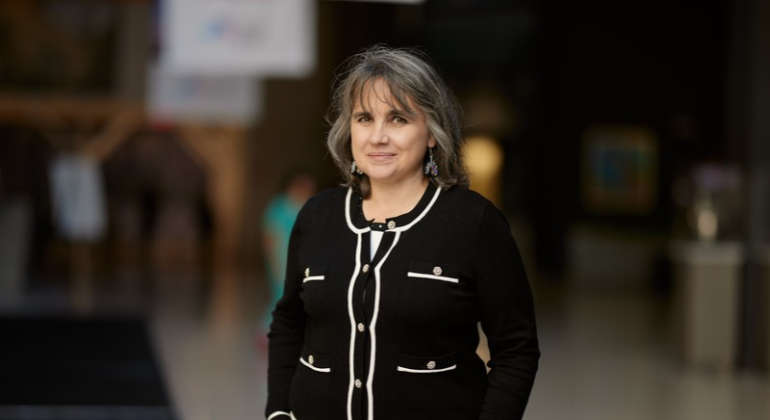
Ebola viruses cause severe disease in humans because they can deactivate the innate immune system. Christopher Basler, PhD, Associate Professor of Microbiology at Mount Sinai and his team have studied how Ebola viruses evade the immune system, and discovered that a viral protein called VP35 is critical to deactivating the immune system. They found that when VP35 interacts with an important cellular protein called PACT, it blocks PACT from activating the immune system, allowing the virus to spread.
“Ebola viruses are extremely lethal, and are a great threat to human health as a bioweapon,” said Dr. Basler. “Currently, there is no approved vaccine or treatment. Our findings will hopefully pave the way for future antiviral treatments.”
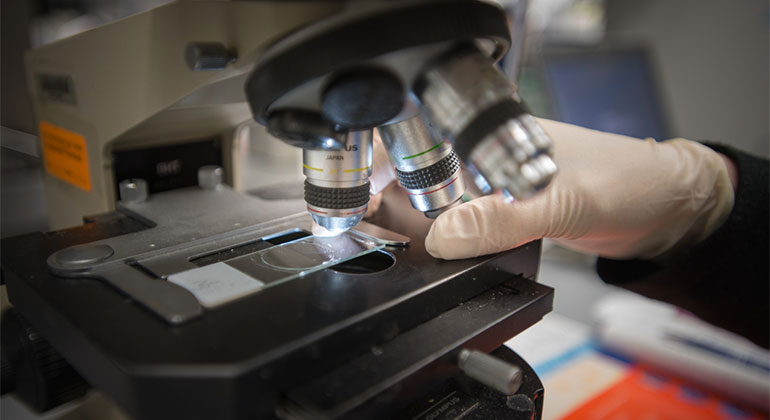
With the help of collaborators at the University of Texas with access to special high containment facilities, Dr. Basler and his team infected healthy cells with Ebola virus cells that had mutated versions of VP35. The mutations disabled VP35’s ability to interact with PACT, therefore allowing it to activate the immune system and prevent the virus from replicating. Next, the researchers overexpressed PACT in healthy cells, and infected them with Ebola virus cells. They found that overexpressing PACT also inhibited viral replication.
Armed with this discovery, Dr. Basler and his team hope to develop drugs that disrupt the interaction of VP35 with PACT, or drugs that overexpress PACT.
The work was supported in part by National Institutes of Health grants AI059536 and AI093786 .
About The Mount Sinai Medical Center
The Mount Sinai Medical Center encompasses both The Mount Sinai Hospital and Icahn School of Medicine at Mount Sinai. Established in 1968, the Icahn School of Medicine at Mount Sinai is one of the leading medical schools in the United States. The Icahn School of Medicine is noted for innovation in education, biomedical research, clinical care delivery, and local and global community service. It has more than 3,400 faculty members in 32 departments and 14 research institutes, and ranks among the top 20 medical schools both in National Institutes of Health (NIH) funding and by U.S. News & World Report.
The Mount Sinai Hospital, founded in 1852, is a 1,171-bed tertiary- and quaternary-care teaching facility and one of the nation’s oldest, largest and most-respected voluntary hospitals. In 2012, U.S. News & World Report ranked The Mount Sinai Hospital 14th on its elite Honor Roll of the nation’s top hospitals based on reputation, safety, and other patient-care factors. Mount Sinai is one of just 12 integrated academic medical centers whose medical school ranks among the top 20 in NIH funding and by U.S. News & World Report and whose hospital is on the U.S. News & World Report Honor Roll. Nearly 60,000 people were treated at Mount Sinai as inpatients last year, and approximately 560,000 outpatient visits took place.
For more information, visit http://www.mountsinai.org.
Find Mount Sinai on:
Facebook: http://www.facebook.com/mountsinainyc
Twitter @mountsinainyc
YouTube: http://www.youtube.com/mountsinainy
###
About the Mount Sinai Health System
Mount Sinai Health System is one of the nation’s leading integrated academic health systems and one of the largest in the New York metropolitan area. Its comprehensive system includes seven hospitals, more than 400 outpatient practices, over 600 research and clinical laboratories, the Icahn School of Medicine at Mount Sinai, the Graduate School of Biomedical Sciences, and the Mount Sinai Phillips School of Nursing. Together, the Health System comprises approximately 48,000 employees, more than 9,000 physicians, and 8,600 nurses.
As a leading learning health system, Mount Sinai combines clinical expertise with scientific discovery to improve patient care while training the next generation of health care and biomedical leaders. The Health System provides care across every stage of life, from prenatal care through geriatrics, while advancing personalized medicine through artificial intelligence, data science, and biomedical research.
Mount Sinai is consistently recognized among the nation’s leading academic health systems for patient care, research, and education. The Mount Sinai Hospital is ranked No. 1 in New York by Newsweek and No. 5 on the magazine’s World’s Best Hospitals list. The Icahn School of Medicine at Mount Sinai ranks No. 11 among U.S. medical schools and No. 1 among freestanding medical schools for National Institutes of Health funding, reflecting the strength of its scientific enterprise and leadership in biomedical research.

Mount Sinai Study Finds Safety Prompts Can Help AI Models Make Safer Clinical Choices
Oct 08, 2026 View All Press Releases