Fully Dissolvable, Temporary Stent for Opening Heart Artery Blockages Now Being Tested at The Mount Sinai Medical Center
ABSORB III nationwide clinical trial evaluating the efficiency and safety of Absorb drug-eluting Bioresorbable Vascular Scaffolds (Absorb BVS) for coronary artery disease patients.
The Mount Sinai Medical Center is participating in the nationwide ABSORB III clinical trial testing the performance and potential clinical benefits of a fully dissolvable and temporary drug eluting stent to open heart artery blockages. The randomized trial aims to compare the efficiency and safety of Absorb™ Bioresorbable Vascular Scaffolds (Absorb BVS) in coronary artery disease patients and compare it to the current standard of care — drug eluting metal stents.
Absorb BVS is a flexible artery support tube made of a naturally dissolvable material called polylactide. It is inserted by interventional cardiologists minimally invasively during a cardiac catheterization procedure. Absorb BVS works to line the interior of a blocked heart artery to keep it open and restore proper blood flow to the heart. The supportive tube then dissolves into the artery wall within two years.
"Dissolvable stents may be a future game-changer for the way we treat coronary artery disease and heart attack in the United States if proven to show clinical benefit in this nationwide clinical trial," says Samin K. Sharma, MD, Director of Clinical and Interventional Cardiology at The Mount Sinai Medical Center and the Zena and Michael A. Wiener Professor of Medicine at Icahn School of Medicine at Mount Sinai. "The stent is designed to open a blocked heart vessel and eventually dissolve and disappear, leaving no remnants on the heart of a cardiac interventional procedure."
"We look forward to testing this innovative absorbable artery support technology’s efficiency and safety at Mount Sinai," says Annapoorna S. Kini, MD, Director of the Cardiac Catheterization Laboratory at The Mount Sinai Medical Center. "Since the stent is designed to completely dissolve into the arterial tissue it may potentially help improve the overall health of a patient’s once blocked heart vessel while restoring its natural flexibility and movement."
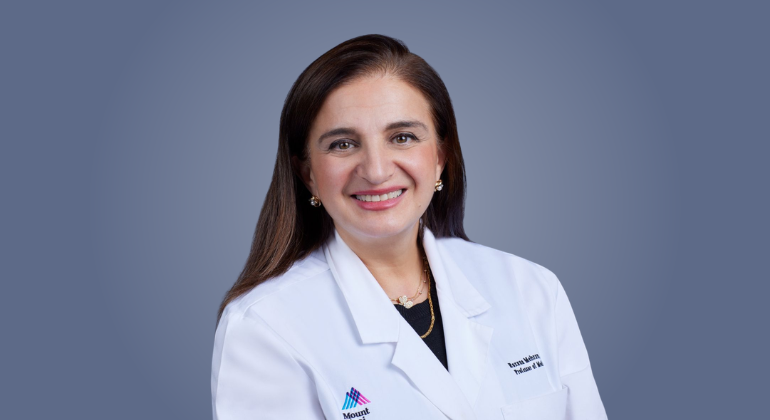
"Heart disease is still the number one killer of Americans. This is why we need to study in clinical trial every available therapeutic option for our heart patients to improve their overall heart health and prevent future deadly heart attacks," says Roxana Mehran, MD, Director of Interventional Cardiovascular Research and Clinical Trials at Icahn School of Medicine at Mount Sinai. "It is critical that advances in cardiac interventional technology, currently being used on other continents to help unblock arteries, be tested in clinical trial in the U.S."
The randomized ABSORB III clinical trial plans to enroll approximately 2,250 coronary artery disease patients across the country. Mount Sinai hopes to enroll 50 patients.
Recently, Absorb BVS became commercially available in Europe, India, and parts of Latin America and Asia. So far, more than 1,000 patients around the world have been treated with the device. Absorb BVS is made by the global healthcare company Abbott.
Mount Sinai study co-investigators Dr. Sharma and Pedro Moreno, MD, receive financial compensation as lecturers for Abbott Laboratories, the study’s sponsor and manufacturer of ABSORB™ BVS. Also, as a consultant for Abbott, Dr. Mehran receives financial compensation.
About The Mount Sinai Medical Center
The Mount Sinai Medical Center encompasses both The Mount Sinai Hospital and Icahn School of Medicine at Mount Sinai. Established in 1968, the Icahn School of Medicine is one of the leading medical schools in the United States, with more than 3,400 faculty in 32 departments and 14 research institutes. It ranks among the top 20 medical schools both in National Institutes of Health (NIH) funding and by U.S. News & World Report. The Mount Sinai Hospital, founded in 1852, is a 1,171-bed tertiary- and quaternary-care teaching facility and one of the nation's oldest, largest and most-respected voluntary hospitals. The Mount Sinai Hospital is nationally ranked by U.S. News & World Report as one of the top 25 hospitals in 7 specialties based on reputation, safety, and other patient-care factors.
For more information, visit http://www.mountsinai.org/.
Find Mount Sinai on:
Facebook: http://www.facebook.com/mountsinainyc
Twitter @mountsinainyc
About the Mount Sinai Health System
Mount Sinai Health System is one of the nation’s leading integrated academic health systems and one of the largest in the New York metropolitan area. Its comprehensive system includes seven hospitals, more than 400 outpatient practices, over 600 research and clinical laboratories, the Icahn School of Medicine at Mount Sinai, the Graduate School of Biomedical Sciences, and the Mount Sinai Phillips School of Nursing. Together, the Health System comprises approximately 48,000 employees, more than 9,000 physicians, and 8,600 nurses.
As a leading learning health system, Mount Sinai combines clinical expertise with scientific discovery to improve patient care while training the next generation of health care and biomedical leaders. The Health System provides care across every stage of life, from prenatal care through geriatrics, while advancing personalized medicine through artificial intelligence, data science, and biomedical research.
Mount Sinai is consistently recognized among the nation’s leading academic health systems for patient care, research, and education. The Mount Sinai Hospital is ranked No. 1 in New York by Newsweek and No. 5 on the magazine’s World’s Best Hospitals list. The Icahn School of Medicine at Mount Sinai ranks No. 11 among U.S. medical schools and No. 1 among freestanding medical schools for National Institutes of Health funding, reflecting the strength of its scientific enterprise and leadership in biomedical research.


Mount Sinai’s Roxana Mehran, MD, Named President of the American College of Cardiology
Mar 30, 2026 View All Press Releases