
Strains
Pulled muscle
A strain is when a muscle is stretched too much and part of it tears. It is also called a pulled muscle. A strain is a painful injury. It can be caused by an accident, overusing a muscle, or using a muscle in the wrong way.
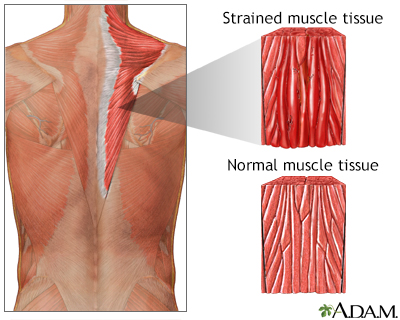
A muscle strain is the stretching or tearing of muscle fibers. A muscle strain can be caused by sports, exercise, a sudden movement, or trying to lift something that is too heavy. Symptoms of a muscle strain include pain, tightness, swelling, tenderness, and the inability to move the muscle very well.
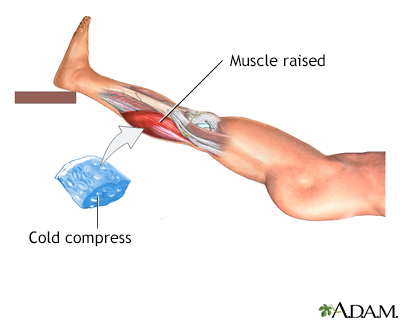
Leg strain is also known as a pulled muscle. It results from damage to a muscle from excessive physical activity. Proper treatment of a pulled muscle includes a cold compress, rest, and elevation of the damaged muscle above the level of the heart.
Causes
A strain may be caused by:
- Too much physical activity or effort
- Improperly warming up before a physical activity
- Poor flexibility
Symptoms
Symptoms of a strain can include:
- Pain and difficulty moving the injured muscle
- Discolored and bruised skin
- Swelling
First Aid
Take the following first aid steps to treat a strain:
- Apply ice right away to reduce swelling. Wrap the ice in cloth. Do not place ice directly on the skin. Apply ice for 10 to 15 minutes every 1 hour for the first day and every 3 to 4 hours after that.
- Use ice for the first 3 days. After 3 days, either heat or ice may be helpful if you still have pain.
- Rest the pulled muscle for at least a day. If possible, keep the pulled muscle raised above your heart.
- Try not to use a strained muscle while it is still painful. When the pain starts to go away, you can slowly increase activity by gently stretching the injured muscle.
When to Contact a Medical Professional
Call your local emergency number, such as 911, if:
- You are unable to move the muscle.
- The injury is bleeding.
Contact your health care provider if the pain does not go away after several weeks.
Prevention
The following tips may help you reduce your risk for a strain:
- Warm-up properly before exercise and sports.
- Keep your muscles strong and flexible.
References
Biundo JJ. Bursitis, tendinitis, and other periarticular disorders and sports medicine. In: Goldman L, Schafer AI, eds. Goldman-Cecil Medicine. 26th ed. Philadelphia, PA: Elsevier; 2020:chap 247.
Geiderman JM, Torbati S. General principles of orthopedic injuries. In: Walls RM, ed. Rosen's Emergency Medicine: Concepts and Clinical Practice. 10th ed. Philadelphia, PA: Elsevier; 2023:chap 41.
Wang D, Eliasberg CD, Rodeo SA. Physiology and pathophysiology of musculoskeletal tissues. In: Miller MD, Thompson SR. eds. DeLee, Drez, & Miller's Orthopaedic Sports Medicine. 5th ed. Philadelphia, PA: Elsevier; 2020:chap 1.
Version Info
Last reviewed on: 4/27/2023
Reviewed by: Linda J. Vorvick, MD, Clinical Professor, Department of Family Medicine, UW Medicine, School of Medicine, University of Washington, Seattle, WA. Also reviewed by David C. Dugdale, MD, Medical Director, Brenda Conaway, Editorial Director, and the A.D.A.M. Editorial team.
