
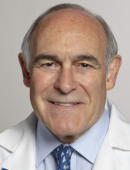
Robert J. Desnick
- DEAN FOR GENETICS AND GENOMIC MEDICINE
- PROFESSOR AND CHAIRMAN EMERITUS GENETICS AND GENOMIC SCIENCES
- PROFESSOR Pediatrics
- PROFESSOR Oncological Sciences
- PROFESSOR Obstetrics, Gynecology and Reproductive Science
Print Profile
Specialty
Certifications
Clinical Molecular Genetics
Clinical Genetics
Clinical Biochemical Genetics
Clinical Focus
Research Topics
Training Areas
Education
MD, Univ of Minnesota-Med Sch. Minneapo
Residency, Pediatrics
Univ of Minnesota-Med Sch. Minneapo
Biography
In the News
In this "Daily Check Up" feature from The Daily News, Dr. Desnick talks about treating genetic diseases.
View the PDF.
Awards
2010 -
Distingushed Service Award
Association of American Medical Colleges2005 -
Albion O. Bernstein, MD Award for Contributions in Disease Prevention
New York State Medical Society2005 -
Award for Excellence in Clinical Research
National Center for Research Resources, NIH2004 -
Distinguished Alumni Award
University of Minnesota Medical School2004 -
Edward H. Ahrens Jr. Award for Research
Association for Patient-Oriented Research2004 -
Elected Member
Institute of Medicine of the National Academy of Sciences2004 -
Elected Senior Fellow,
American Association for the Advancement of Science2004 -
Doctor of Science, Honoris Causa
Mount Sinai School of Medicine of New York University2004 -
Jacobi Medal
Mount Sinai Alumni Association2003 -
J. Lester Gabrilove Award for Medical Research
2000 - 2011
Best Doctors
New York Magazine1999 -
Honorary Member
Societá Italiana di Pediatria1992 - 2004
NIH MERIT Award
1991 -
Correspondent Member
Societá Italiana di Pediatria1991 -
Outstanding Faculty Award
Mount Sinai School of Medicine1985 -
Honorary Member
Japanese Society for Inherited Metabolic Diseases1981 -
E. Mead Johnson Award for Research in Pediatrics of the American Academy of Pediatrics
1975 - 1980
NIH Research Career Development Award
1973 -
C.J. Watson Award, University of Minnesota
1968 - 1970
U.S. Public Health Service Fellowship in Genetics
Research
Pharmacogenetics / Pharmacogenomics
These studies involve the identification of variations in human genes responsible for the metabolism of drugs. These variations cause the adverse drug responses that are common and often life-threatening. Examples of the known genes with varying pharmacogenetic responses are the P450 genes. By identifying the key genetic variations in an individual's genome that alter the activation, metabolism, transport, distribution and clearance of a given drug, a person's pharmacogenetic profile can be determined, permitting personalized drug selection and dosage. Currently, we are a site for the NIH-sponsored clinical trial of genome-guided dosing for warfarin. Using single nucleotide polymorphisms (SNPs), candidate genes for a given drug are interrogated for informative haplotypes which are then tested in a given population of individuals experiencing adverse affects of the drug. In addition, variations that alter drug metabolism can be tested in individuals taking the drug.Gene Discovery for Rare & Common Diseases
Using positional cloning and linkage analysis strategies, our previous efforts have resulted in the identification of several genes causing Mendelian disorders. Current research is focused on several Mendelian disorders and complex traits including Crohn’s disease, a common inflammatory bowel disease. To identify the predisposing/susceptibility genes for complex traits, genome-wide association studies using 1 million SNP-DNA arrays, candidate gene approaches, and sequencing for rare variants are being used. Studies of common complex traits will guide future predictive and preventive genetic strategies for improved, personalized healthMolecular Genetics and Treatment of Lysosomal Storage Diseases & Inhertited Porphyrias
For the past two decades, studies of the lysosome and the pathogenesis and treatment of lysosomal storage diseases have been a major research theme of this laboratory. For example, in Fabry disease (galactosidase-Gal A] deficiency), our group isolated the human-Gal A gene, developed novel overexpression methods, and made knock-out mice with Fabry disease for preclinical studies of enzyme and gene therapy. These basic science studies provided the rationale for the clinical trials of enzyme therapy that proved effective in this disease. These studied culminated in approval of enzyme replacement for Fabry disease by the FDA in April 2003. Current studies are directed to: 1) identify and characterize the structure/function relationships of mutations in the Gal A gene which cause Fabry disease, 2) develop novel therapeutic strategies to treat Fabry disease and other disorders due to protein misfolding by rescuing/stabilizing the misfolded protein with small molecule pharmacologic chaperones, and 3) develop stem cell and gene replacement strategies for these diseases.Heme biosynthesis requires eight enzymatic steps to convert succinyl-CoA and glycine to the final product, heme. All eight enzymes are encoded by nuclear genes, with the first and last three enzymes being located in the mitochondria while the second through fifth enzymes are in the cytosol. The inherited porphyrias are inborn errors of heme biosynthesis, each resulting from the deficient activity of a particular enzyme. Previously, our laboratory: 1) developed assays, 2) purified these enzymes, 3) isolated and characterized the cDNAs and genomic sequences encoding several enzymes, and 4) identified molecular lesions causing the different porphyrias. Recently, we developed knock-in mouse models for an erythropoietic porphyria, congenital erythropoietic porphyria (CEP), and are currently developing knock-in mice to generate an improved mouse model for a hepatic porphyria, acute intermittent porphyria (AIP). These models will permit studies of the cutaneous and acute neurologic pathophysiologies of these porphyrias, and facilitate the development of novel therapies. Current therapeutic efforts in these models include hematopoietic stem cell therapy for CEP and AAV-8 mediated hepatic-targeted gene therapy for AIP.
Publications
Cuhna L, Kuti M, Bishop DF, Mezei M, Zeng L, Zhou MM, Desnick RJ. Human uroporphyrinogen III synthase: NMR-based mapping of the active site. Proteins 2005; 71: 855-873.
Spada M, Pagliardini S, Yasuda M, Tukel T, Thiagarajan G, Sakuraba H, Ponzone A, Desnick RJ. High incidence of later-onset Fabry disease revealed by newborn screening. Am. J. Hum. Genet 2006; 79: 31-40.
Shabbeer J, Yasuda M, Benson SD, Desnick RJ. Fabry disease: Identification of 50 novel a-galactosidase A mutations causing the classic phenotype and three-dimensional structural analysis of 29 missense mutations. Hum. Genomics 2006; 2: 297-309.
Bishop DF, Johansson A, Phelps R, Shady AA, Ramirez MM, Yasuda M, Caro A, Desnick RJ. Uroporphyrinogen III synthase knock-in mice have the human congenital erythropoietic porphyria phenotype including the characteristic light-induced cutaneous lesions. Am. J. Hum. Genet 2006; 78: 645-658.
Banikazemi M, Bultas J, Waldek S, Wilcox W, Whitley C, McDonald M, Finkel R, Packman S, Bichet D, Warnock D, Brenner BM, Desnick RJ. Algalsidase-beta therapy for advanced Fabry disease: A randomized trial. Ann. Intern. Med 2007; 146: 77-86.
Germain DP, Waldek S, Banikazemi M, Bushinsky DA, Charrow J, Desnick RJ, Lee P, Loew T, Vedder AC, Abichandani R, Wilcox WR, Guffon N. Sustained, long-term renal stabilization after 54 months of agalsidase beta therapy in patients with Fabry disease. J. Am. Soc. Nephrol 2007; 18: 1547-1557.
Grace ME, Balwani M, Nazarenko I, Prakash-Cheng A, Desnick RJ. Type 1 Gaucher disease: Null and hypomorphic novel chitotriosidase mutations-implications for diagnosis and therapeutic monitoring. Hum. Mut 2007; 28: 866-873.
Scott SA, Edelmann L, Kornreich R, Erazo M, Desnick RJ. CYP 2C9, 2C19, and 2D6 allele frequencies in the Ashkenazi Jewish population. Pharmacogenomics 2007; 8: 721-730.
Yasuda M, Domaradzki M, Bishop DF, Desnick RJ. Acute intermittent porphyria. Vector optimization for AAV-mediated gene therapy. J. Gene Med 2007; 9: 809-911.
Scott SA, Edelmann L, Kornreich R, Desnick RJ. Warfarin Pharmacogenetics: CYP2C9 and VKORC1 Genetypes Predict Different Sensitivity and Resistance Frequencies in the Ashkenazi and Sephardi Jewish Populations. Am. J. Hum. Genet 2008; 82: 495-500.
Bishop DF, Schneider-Yin X, Clavero S, Yoo HW, Minder EI, Desnick RJ. Congenital erythropoietic porphyria: a novel uroporphyrinogen III synthase branchpoint mutation reveals underlying wild-type alternatively spliced transcripts. Blood 2010 Feb; 115(5): 1062-1069.
Clavero S, Bishop DF, Haskins ME, Giger U, Kauppinen R, Desnick RJ. Feline acute intermittent porphyria: a phenocopy masquerading as an erythropoietic porphyria due to dominant and recessive hydroxymethylbilane synthase mutations. Human molecular genetics 2010 Feb; 19(4): 584-896.
Yasuda M, Bishop DF, Fowkes M, Cheng SH, Gan L, Desnick RJ. AAV8-mediated gene therapy prevents induced biochemical attacks of acute intermittent porphyria and improves neuromotor function. Molecular therapy : the journal of the American Society of Gene Therapy 2010 Jan; 18(1): 17-22.
Wozniak MA, Kittner SJ, Tuhrim S, Cole JW, Stern B, Dobbins M, Grace ME, Nazarenko I, Dobrovolny R, McDade E, Desnick RJ. Frequency of unrecognized Fabry disease among young European-American and African-American men with first ischemic stroke. Stroke; a journal of cerebral circulation 2010 Jan; 41(1): 78-81.
Khanna R, Soska R, Lun Y, Feng J, Frascella M, Young B, Brignol N, Pellegrino L, Sitaraman SA, Desnick RJ, Benjamin ER, Lockhart DJ, Valenzano KJ. The pharmacological chaperone 1-deoxygalactonojirimycin reduces tissue globotriaosylceramide levels in a mouse model of Fabry disease. Molecular therapy : the journal of the American Society of Gene Therapy 2010 Jan; 18(1): 23-33.
Balwani M, Fuerstman L, Kornreich R, Edelmann L, Desnick RJ. Type 1 Gaucher disease: significant disease manifestations in . Archives of internal medicine 2010 Sep; 170(16): 1463-1469.
Tukel T, Šošić D, Al-Gazali LI, Erazo M, Casasnovas J, Franco HL, Richardson JA, Olson EN, Cadilla CL, Desnick RJ. Homozygous nonsense mutations in TWIST2 cause Setleis syndrome. American journal of human genetics 2010 Aug; 87(2): 289-296.
Scott SA, Edelmann L, Liu L, Luo M, Desnick RJ, Kornreich R. Experience with carrier screening and prenatal diagnosis for 16 Ashkenazi Jewish genetic diseases. Human mutation 2010 Nov; 31(11): 1240-1250.
Scott SA, Khasawneh R, Peter I, Kornreich R, Desnick RJ. Combined CYP2C9, VKORC1 and CYP4F2 frequencies among racial and ethnic groups. Pharmacogenomics 2010 Jun; 11(6): 781-791.
Clavero S, Bishop DF, Giger U, Haskins ME, Desnick RJ. Feline congenital erythropoietic porphyria: two homozygous UROS missense mutations cause the enzyme deficiency and porphyrin accumulation. Molecular medicine (Cambridge, Mass.) 2010; 16(9-10): 381-388.
Marshall J, Ashe KM, Bangari D, McEachern K, Chuang WL, Pacheco J, Copeland DP, Desnick RJ, Shayman JA, Scheule RK, Cheng SH. Substrate reduction augments the efficacy of enzyme therapy in a mouse model of Fabry disease. PloS one 2010; 5(11): e15033.
Jaremko M, Kasai Y, Barginear MF, Raptis G, Desnick RJ, Yu C. Tamoxifen metabolite isomer separation and quantification by liquid chromatography-tandem mass spectrometry. Analytical chemistry 2010 Dec; 82(24): 10186-10193.
Wickliffe JK, Abdel-Rahman SZ, Lee C, Kormos-Hallberg C, Sood G, Rondelli CM, Grady JJ, Desnick RJ, Anderson KE. CYP1A2*1F and GSTM1 alleles are associated with susceptibility to porphyria cutanea tarda. Molecular medicine (Cambridge, Mass.) 2011; 17(3-4): 241-247.
Scott SA, Martis S, Peter I, Kasai Y, Kornreich R, Desnick RJ. Identification of CYP2C19*4B: pharmacogenetic implications for drug metabolism including clopidogrel responsiveness. The pharmacogenomics journal 2011 Mar;.
Bishop DF, Clavero S, Mohandas N, Desnick RJ. Congenital erythropoietic porphyria: characterization of murine models of the severe common (C73R/C73R) and later-onset genotypes. Molecular medicine (Cambridge, Mass.) 2011; 17(7-8): 748-756.
Dobrovolny R, Nazarenko I, Kim J, Doheny D, Desnick RJ. Detection of large gene rearrangements in X-linked genes by dosage analysis: identification of novel α-galactosidase A (GLA) deletions causing Fabry disease. Human mutation 2011 Jun; 32(6): 688-695.
Franco HL, Casasnovas JJ, Leon RG, Friesel R, Ge Y, Desnick RJ, Cadilla CL. Nonsense mutations of the bHLH transcription factor TWIST2 found in Setleis Syndrome patients cause dysregulation of periostin. The international journal of biochemistry & cell biology 2011 Oct; 43(10): 1523-1531.
Zhang J, Yasuda M, Desnick RJ, Balwani M, Bishop D, Yu C. A LC-MS/MS method for the specific, sensitive, and simultaneous quantification of 5-aminolevulinic acid and porphobilinogen. Journal of chromatography. B, Analytical technologies in the biomedical and life sciences 2011 Aug; 879(24): 2389-2396.
Peter I, Mitchell AA, Ozelius L, Erazo M, Hu J, Doheny D, Abreu MT, Present DH, Ullman T, Benkov K, Korelitz BI, Mayer L, Desnick RJ. Evaluation of 22 genetic variants with Crohn's disease risk in the Ashkenazi Jewish population: a case-control study. BMC medical genetics 2011; 12: 63.
Cervantes-Barragán DE, Villarroel CE, Medrano-Hernández A, Durán-McKinster C, Bosch-Canto V, Del-Castillo V, Nazarenko I, Yang A, Desnick RJ. Setleis syndrome in Mexican-Nahua sibs due to a homozygous TWIST2 frameshift mutation and partial expression in heterozygotes: review of the focal facial dermal dysplasias and subtype reclassification. Journal of medical genetics 2011 Oct; 48(10): 716-720.
Barginear MF, Jaremko M, Peter I, Yu C, Kasai Y, Kemeny M, Raptis G, Desnick RJ. Increasing tamoxifen dose in breast cancer patients based on CYP2D6 genotypes and endoxifen levels: effect on active metabolite isomers and the antiestrogenic activity score. Clinical pharmacology and therapeutics 2011 Oct; 90(4): 605-611.
Scott SA, Patel M, Martis S, Lubitz SA, van der Zee S, Yoo C, Edelmann L, Halperin JL, Desnick RJ. Copy number variation and warfarin dosing: evaluation of CYP2C9, VKORC1, CYP4F2, GGCX and CALU. Pharmacogenomics 2012 Feb; 13(3).
Clinical Trials
Industry Relationships
Physicians and scientists on the faculty of the Icahn School of Medicine at Mount Sinai often interact with pharmaceutical, device and biotechnology companies to improve patient care, develop new therapies and achieve scientific breakthroughs. In order to promote an ethical and transparent environment for conducting research, providing clinical care and teaching, Mount Sinai requires that salaried faculty inform the School of their relationships with such companies.
Below are financial relationships with industry reported by Dr. Desnick during 2012 and/or 2013. Please note that this information may differ from information posted on corporate sites due to timing or classification differences.
Consulting:
- Genzyme Corporation; Synageva BioPharma
Scientific Advisory Board:
- Genzyme Corporation
Royalty Payments:
- Genzyme Corporation; Luminex Corporation; Shire
Mount Sinai's faculty policies relating to faculty collaboration with industry are posted on our website at http://icahn.mssm.edu/about-us/services-and-resources/faculty-resources/handbooks-and-policies/faculty-handbook. Patients may wish to ask their physician about the activities they perform for companies.
Icahn Medical Institute Floor 14 Room 14-34
1425 Madison Avenue
New York, NY 10029
Fax: 212-360-1809


