Why Choose The Mount Sinai Kidney Stone Center?
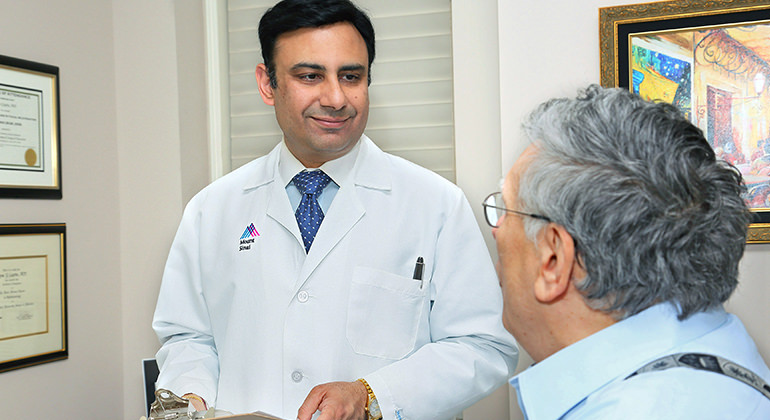
In comparison with other kidney stone centers, our primary approach focuses on prevention and noninvasive or medical management of kidney stones instead of surgery. This approach can involve consultation with several health care providers:
- a nephrologist experienced in the causes and prevention of kidney stone disease
- a dietitian who can evaluate your nutritional needs and create a personalized plan to help prevent kidney stones while maintaining a balanced and heart-healthy diet
- an alternative medicine specialist who will suggest alternatives to medicines and invasive procedures
- an endocrinologist who can evaluate your bone health, especially in women at risk for osteopenia and osteoporosis
Compared to other centers, we can do in-house diagnosis and treatment in many cases, including ultrasonography, radiography, and shock wave lithotripsy. Most stones do not require surgical treatment. We treat obstructing kidney stones or stones that are likely to cause infection, obstruction or pain with several minimally invasive techniques, many of which have been developed or refined by our team. Every patient receives a thorough personalized metabolic assessment to determine the unique individual factors that are or have produced kidney stones, nutritional counseling, and recommendation for supplements, vitamins, minerals, or medications that can prevent future kidney stones and some cases dissolve current ones. We also perform periodic evaluation with state-of-the-art non-invasive imaging to monitor kidney stones that do not need removal and any new stones, since early detection can avert a painful kidney stone attack.
Kidney Stones
Kidney stones are one of the most common disorders of the urinary tract, affecting one in 11 people in the United States. At Mount Sinai, we have extensive experience diagnosing and treating kidney stones of all types and sizes.
The kidneys function as a filter for the body, removing waste products from the bloodstream and then removing them from the body in the form of urine. Kidney stones happen when the mineral waste deposits in the kidney are not removed by urination. These deposits can build up and cause blockage inside the kidney or can get caught in the ureter (the tube going from the kidney to the bladder). Kidney stones can be as small as a grain of sand or as large as a lemon.
Kidney stones can form for various reasons, such as an imbalance in the chemical composition of urine, inadequate fluid consumption, poor diet (one high in fats, sodium, and sugars), blocked or restricted urine flow, or certain diseases (i.e., gout, colitis, and arthritis).
Stones begin in the kidney and either stay there or slowly move down the ureter (the tube connecting the kidney to the bladder) to reach the bladder before passing through the urethra (the canal that you urinate through). Small stones with smooth exteriors may not cause any symptoms, but larger stones, or ones with rough exteriors can be painful as they try to leave your body.
Our Contributions to the Field
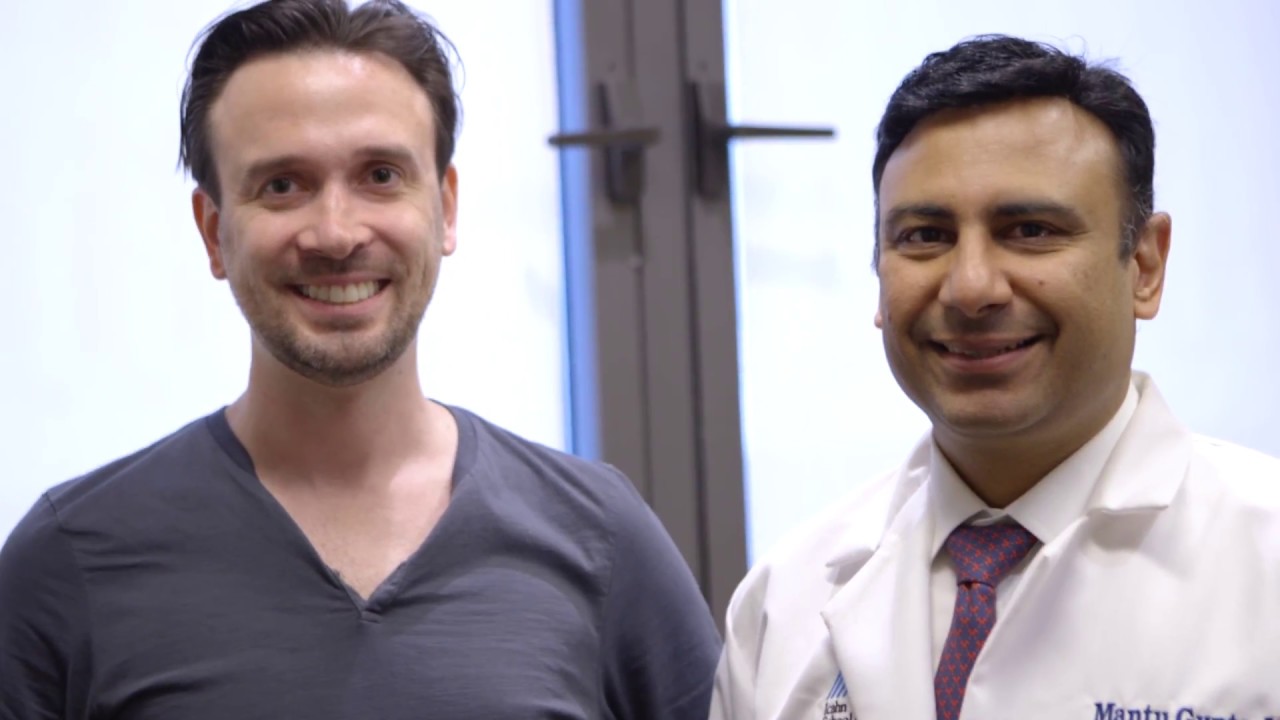
Mantu Gupta, MD, has pioneered many of the methods and strategies used around the world to increase safety and efficacy of kidney stone treatment.
Dr. Gupta’s criteria for determining appropriate candidates for Extracorporeal Shock Wave Lithotripsy (ESWL) help us to maximize both effectiveness and patient safety. One such method involves measuring the distance that shock waves have to travel to reach the kidney stone. Dr. Gupta’s research shows that the longer the distance (called the skin to stone distance), the lower the chances of success. In a separate study, Dr. Gupta finds that obesity, measured by bioimpedance, results in decreased effectiveness. He also demonstrates that using an escalating voltage strategy, where we start with a low voltage and gradually increase it, results in better stone fragmentation and less kidney injury. Another investigation establishes that administering a diuretic called mannitol to patients who have partial kidney failure prior to ESWL protects the kidney. Dr. Gupta’s research also finds that we can treat patients who have larger stones but are not candidates for more invasive therapies by placing a sheath into the kidney, then flushing out the fragments so they do not cause blockage.