
Short bowel syndrome
Small intestine insufficiency; Short gut syndrome; Necrotizing enterocolitis - short bowel
Short bowel syndrome is a problem that occurs when part of the small intestine is missing or has been removed during surgery. Nutrients are not properly absorbed into the body as a result.
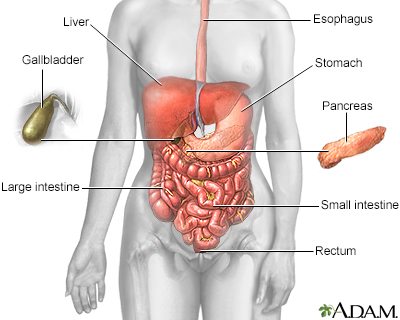
The esophagus, stomach, large and small intestine, aided by the liver, gallbladder and pancreas convert the nutritive components of food into energy and break down the non-nutritive components into waste to be excreted.
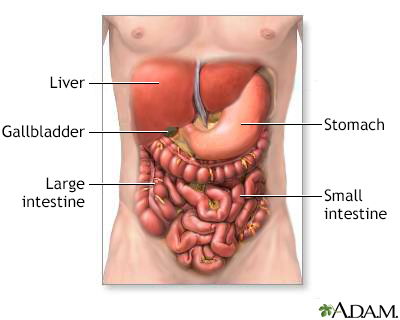
The digestive system organs in the abdominal cavity include the liver, gallbladder, stomach, small intestine and large intestine.
Causes
The small intestine absorbs much of the nutrients found in foods we eat. When two-thirds of the small intestine is missing, the body may not absorb enough food to stay healthy and maintain your weight.
Some infants are born missing part or much of their small intestine.
More often, short bowel syndrome occurs because much of the small intestine is removed during surgery. This type of surgery may be needed:
- After gunshots or other trauma damaged the intestines
- For someone with severe Crohn disease
- For infants, often born too early, when part of their intestines dies
- When blood flow to the small intestine is reduced due to blood clots or narrowed arteries
Symptoms
Symptoms may include:
- Diarrhea
- Fatigue
- Pale, greasy stools
- Swelling (edema), especially of the legs
- Very foul-smelling stools
- Weight loss
- Dehydration
Exams and Tests
The following tests may be done:
- Blood chemistry tests (such as albumin level)
- Complete blood count (CBC)
- Fecal fat test
- Small intestine x-ray
- Vitamin levels in the blood
Treatment
Treatment is aimed at relieving symptoms and ensuring the body receives enough hydration and nutrients.
A high-calorie diet that supplies:
- Key vitamins and minerals, such as iron, folic acid, and vitamin B12
- Enough carbohydrates, proteins, and fats
If needed, injections of some vitamins and minerals or special growth factors will be given.
Medicines to slow down the normal movement of the intestine can be tried. This may allow food to remain in the intestine longer. Medicines to lower the amount of stomach acid may also be needed.
If the body is not able to absorb enough nutrients, total parenteral nutrition (TPN) is tried. It will help you or your child get nutrition from a special formula through a vein in the body. Your health care provider will select the right amount of calories and TPN solution. Sometimes, you can also eat and drink while getting nutrition from TPN.
Small bowel transplantation is an option in some cases.
Outlook (Prognosis)
The condition may improve over time if it is due to surgery. Nutrient absorption may slowly get better.
Possible Complications
Complications may include:
- Bacterial overgrowth in the small intestine
- Nervous system problems caused by a lack of vitamin B12 (This problem can be treated with vitamin B12 injections.)
- Too much acid in the blood (metabolic acidosis due to diarrhea)
- Gallstones
- Kidney stones
- Dehydration
- Malnutrition
- Weakened bones (osteomalacia)
- Weight loss
When to Contact a Medical Professional
Contact your provider if you develop symptoms of short bowel syndrome, especially after you have had bowel surgery.
References
Buchman AL. Short bowel syndrome. In: Feldman M, Friedman LS, Brandt LJ, eds. Sleisenger and Fordtran's Gastrointestinal and Liver Disease. 11th ed. Philadelphia, PA: Elsevier; 2021:chap 106.
Semrad CE. Approach to the patient with diarrhea and malabsorption. In: Goldman L, Schafer AI, eds. Goldman-Cecil Medicine. 26th ed. Philadelphia, PA: Elsevier; 2020:chap 131.
Venick RS. Short bowel syndrome. In: Wyllie R, Hyams JS, Kay M, eds. Pediatric Gastrointestinal and Liver Disease. 6th ed. Philadelphia, PA: Elsevier; 2021:chap 35.
Version Info
Last reviewed on: 5/4/2022
Reviewed by: Michael M. Phillips, MD, Emeritus Professor of Medicine, The George Washington University School of Medicine, Washington, DC. Also reviewed by David C. Dugdale, MD, Medical Director, Brenda Conaway, Editorial Director, and the A.D.A.M. Editorial team.
