
Tendinitis
Calcific tendinitis; Bicipital tendinitis
Tendons are the fibrous structures that join muscles to bones. When these tendons become swollen or inflamed, it is called tendinitis. In many cases, tendinosis (tendon degeneration) is also present.
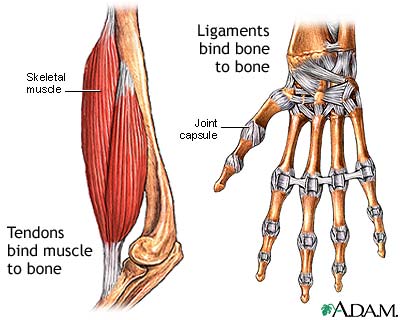
A tendon is a fibrous connective tissue which attaches muscle to bone. Tendons may also attach muscles to structures such as the eyeball. A tendon serves to move the bone or structure. A ligament is a fibrous connective tissue which attaches bone to bone, and usually serves to hold structures together and keep them stable.
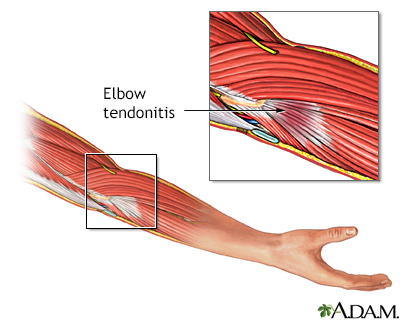
Tendonitis is the inflammation, irritation, and swelling of a tendon. It can occur as a result of injury, overuse, or with aging as the tendon loses elasticity. Any action that places prolonged repetitive strain on the forearm muscles can cause tendonitis. The most common symptom of tendonitis is pain, tenderness, and the increase of pain with movement.
Causes
Tendinitis can occur as a result of injury or overuse. Playing sports is a common cause. Tendinitis also can occur with aging as the tendon loses elasticity. Body-wide (systemic) diseases, such as rheumatoid arthritis or diabetes, can also lead to tendinitis.
Tendinitis can occur in any tendon. Commonly affected sites include the:
- Elbow
- Heel (Achilles tendinitis)
- Knee
- Shoulder
- Thumb
- Wrist
Symptoms
Symptoms of tendinitis may vary with activity or cause. Main symptoms may include:
- Pain and tenderness along a tendon, usually near a joint
- Pain at night
- Pain that is worse with movement or activity
- Stiffness in the morning
Exams and Tests
The health care provider will perform a physical exam. During the exam, the provider will look for signs of pain and tenderness when the muscle attached to the tendon is moved in certain ways. There are specific tests for specific tendons.
The tendon can be inflamed, and the skin over it may be warm and red.
Other tests that may be done include:
- Ultrasound
- X-ray
- MRI
Treatment
The goal of treatment is to relieve pain and reduce inflammation.
The provider will recommend resting the affected tendon to help it recover. This may be done using a splint or a removable brace. Applying heat or cold to the affected area can help.
Over-the-counter pain relievers such as NSAIDs like aspirin or ibuprofen, can also reduce both pain and inflammation. Steroid injections into the tendon sheath can also be very useful for controlling pain.
The provider may also suggest physical therapy to stretch and strengthen the muscle and tendon. This can restore the tendon's ability to function properly, improve healing, and prevent future injury.
In rare cases, surgery is needed to remove the inflamed tissue from around the tendon.
Outlook (Prognosis)
Symptoms improve with treatment and rest. If the injury is caused by overuse, a change in work habits may be needed to prevent the problem from coming back.
Possible Complications
Complications of tendinitis may include:
- Long-term inflammation raises the risk for further injury, such as rupture
- Return of tendinitis symptoms
When to Contact a Medical Professional
Call for an appointment with your provider if symptoms of tendinitis occur.
Prevention
Tendinitis can be prevented by:
- Avoiding repetitive motions and overuse of the arms and legs.
- Keeping all your muscles strong and flexible.
- Doing warm up exercises at a relaxed pace before vigorous activity.
References
Biundo JJ. Bursitis, tendinitis, and other periarticular disorders and sports medicine. In: Goldman L, Schafer AI, eds. Goldman-Cecil Medicine. 26th ed. Philadelphia, PA: Elsevier; 2020:chap 247.
Geiderman JM, Torbati S. General principles of orthopedic injuries. In: Walls RM, ed. Rosen's Emergency Medicine: Concepts and Clinical Practice. 10th ed. Philadelphia, PA: Elsevier; 2023:chap 41.
Version Info
Last reviewed on: 7/25/2022
Reviewed by: Linda J. Vorvick, MD, Clinical Professor, Department of Family Medicine, UW Medicine, School of Medicine, University of Washington, Seattle, WA. Also reviewed by David C. Dugdale, MD, Medical Director, Brenda Conaway, Editorial Director, and the A.D.A.M. Editorial team.
