
Genital herpes
Herpes - genital; Herpes simplex - genital; Herpesvirus 1; HSV-1; Herpesvirus 2; HSV-2; HSV - antivirals
Genital herpes is a sexually transmitted infection. It is caused by the herpes simplex virus (HSV).
This article focuses on HSV type 2 infection.
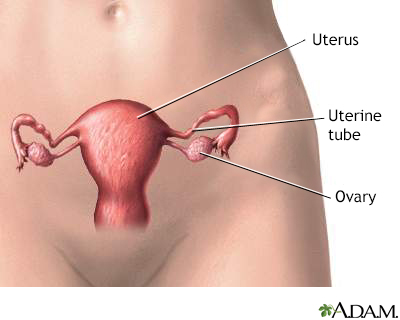
The female reproductive organs are located in the lower abdomen.
Causes
Genital herpes affects the skin or mucous membranes of the genitals. The virus is spread from one person to another during sexual contact.
There are 2 types of HSV:
- HSV-1 most often affects the mouth and lips and causes cold sores or fever blisters. But it can spread from the mouth to the genitals during oral sex.
- HSV type 2 (HSV-2) most often causes genital herpes. It can be spread through skin contact or fluids from the mouth or genitals.
You may become infected with HSV if your skin, vagina, penis, or mouth comes into contact with someone who already has HSV.
You are most likely to get HSV if you touch the skin of someone who has herpes sores, blisters, or a rash. But the virus can still be spread, even when no sores or other symptoms are present. In some cases, you do not know you are infected.
Genital HSV-2 infections are more common in women than men.
Symptoms
Many people with genital herpes never have sores. Or they have very mild symptoms that go unnoticed or are mistaken for insect bites or another skin condition.
If signs and symptoms do occur during the first outbreak, they can be severe. This first outbreak most often happens within 2 days to 2 weeks of being infected.
General symptoms may include:
- Decreased appetite
- Fever
- General sick feeling (malaise)
- Muscle aches in the lower back, buttocks, thighs, or knees
- Swollen and tender lymph nodes in the groin
Genital symptoms include small, painful blisters filled with clear or straw-colored fluid. Areas where the sores may found include:
- Outer vaginal lips (labia), vagina, cervix, around the anus, and on the thighs or buttocks (in women)
- Penis, scrotum, around the anus, on the thighs or buttocks (in men)
- Tongue, mouth, eyes, gums, lips, fingers, and other parts of the body (in both genders)
Before the blisters appear, there may be tingling, burning, itching, or pain at the site where the blisters will appear. When the blisters break, they leave shallow ulcers that are very painful. These ulcers crust over and heal in 7 to 14 days or more.
Other symptoms may include:
- Pain when passing urine
- Vaginal discharge (in women)
- Problems emptying the bladder that may require a urinary catheter
A second outbreak can appear weeks or months later. It is most often less severe and it goes away sooner than the first outbreak. Over time, the number of outbreaks may decrease.
Exams and Tests
Tests can be done on skin sores or blisters to diagnose HSV. These tests are most often done when someone has a first outbreak and when a pregnant woman develops genital herpes symptoms. Tests include:
- Culture of fluid from a blister or open sore. This test may be positive for HSV. It is most useful during the first outbreak.
- Polymerase chain reaction (PCR) done on fluid from a blister. This is the most accurate test to tell whether HSV is present in the blister.
- Blood tests that check for antibody level to HSV. These tests can identify whether a person has been infected with HSV, even between outbreaks. A positive test result when a person has never had an outbreak would indicate exposure to the virus at some time in the past.
At this time, experts do not recommend screening for HSV-1 or HSV-2 in adolescent or adults who have no symptoms, including pregnant women.
Treatment
Genital herpes cannot be cured. Medicines that fight viruses (such as acyclovir or valacyclovir) may be prescribed.
- These medicines help relieve pain and discomfort during an outbreak by healing the sores more quickly. They seem to work better during a first attack than in later outbreaks.
- For repeat outbreaks, the medicine should be taken as soon as tingling, burning, or itching begins, or as soon as blisters appear.
- People who have many outbreaks may take these medicines daily over a period of time. This helps prevent outbreaks or shorten their length. It can also reduce the chance of giving herpes to someone else.
- Side effects are rare with acyclovir and valacyclovir.
Pregnant women with a history of herpes may be treated during the last month of pregnancy to reduce the chance of having an outbreak at the time of delivery. If there is an outbreak around the time of delivery, a C-section will be recommended. This reduces the chance of infecting the baby.
Follow your health care provider's advice on how to care for your herpes symptoms at home.
Support Groups
More information and support for people with genital herpes condition and their families can be found at a
Outlook (Prognosis)
Once you are infected, the virus stays in your body for the rest of your life. Some people never have another episode. Others have frequent outbreaks that can be triggered by fatigue, illness, menstruation, or stress.
Possible Complications
Pregnant women who have an active genital herpes infection when they give birth may pass the infection to their baby. HSV can cause a brain infection in newborn babies. It is important that your provider know if you have herpes sores or have had an outbreak in the past. This will allow steps to be taken to prevent passing the infection to the baby.
The virus may spread to other parts of the body, including the brain, eyes, esophagus, liver, spinal cord, or lungs. These complications can develop in people who have a weakened immune system due to HIV or certain medicines.
When to Contact a Medical Professional
Contact your provider if you have any symptoms of genital herpes or if you develop fever, headache, vomiting, or other symptoms during or after an outbreak of herpes.
Prevention
If you have genital herpes, you should tell your partner that you have the disease, even if you do not have symptoms.
Condoms are the best way to protect against catching genital herpes during sexual activity.
- Use a condom correctly and consistently to help prevent spread of the disease.
- Only latex condoms prevent infection. Animal membrane (sheepskin) condoms do not work because the virus can pass through them.
- Using the female condom also reduces the risk of spreading genital herpes.
- Although it is much less likely, you can still get genital herpes if you use a condom.
References
Centers for Disease Control and Prevention website. Sexually transmitted infections treatment guidelines, 2021.
Dinulos JGH. Sexually transmitted viral infections. In: Dinulos JGH, ed. Habif's Clinical Dermatology. 7th ed. Philadelphia, PA: Elsevier; 2021:chap 11.
Schiffer JT, Corey L. Herpes simplex virus. In: Bennett JE, Dolin R, Blaser MJ, eds. Mandell, Douglas, and Bennett's Principles and Practice of Infectious Disease. 9th ed. Philadelphia, PA: Elsevier; 2020:chap 135.
US Preventive Services Task Force; Mangione CM, Barry MJ, et al. Serologic screening for genital herpes infection: US Preventive Services Task Force reaffirmation recommendation statement. JAMA. 2023;329(6):502-507. PMID: 36786784
Whitley RJ, Gnann JW. Herpes simplex virus infections. In: Goldman L, Cooney KA, eds. Goldman-Cecil Medicine. 27th ed. Philadelphia, PA: Elsevier; 2024:chap 345.
Version Info
Last reviewed on: 7/12/2023
Reviewed by: John D. Jacobson, MD, Professor Emeritus, Department of Obstetrics and Gynecology, Loma Linda University School of Medicine, Loma Linda, CA. Also reviewed by David C. Dugdale, MD, Medical Director, Brenda Conaway, Editorial Director, and the A.D.A.M. Editorial team.
