
Cholera
Cholera is a bacterial infection of the small intestine that causes a large amount of watery diarrhea.
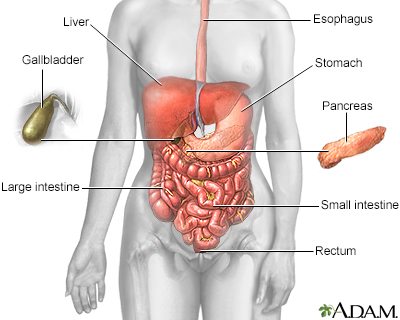
The esophagus, stomach, large and small intestine, aided by the liver, gallbladder and pancreas convert the nutritive components of food into energy and break down the non-nutritive components into waste to be excreted.
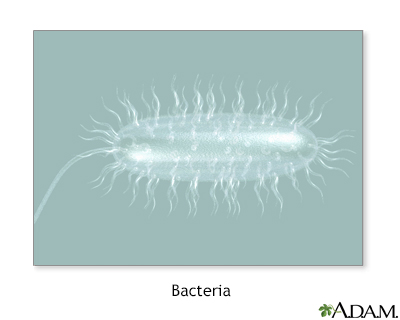
Bacterial infections can lead to the formation of pus, or to the spread of the bacteria in the blood.
Causes
Cholera is caused by the bacteria Vibrio cholerae. These bacteria release a toxin that causes an increased amount of water to be released from cells that line the intestines. This increase in water produces severe diarrhea.
People develop the infection from eating or drinking food or water that contains the cholera germ. Living in or traveling to areas where cholera is present raises the risk of getting it.
Cholera occurs in places with a lack of water treatment or sewage treatment, or crowding, war, and famine. Common locations for cholera include:
- Africa
- Some parts of Asia
- India
- Bangladesh
- Mexico
- South and Central America
Symptoms
Symptoms of cholera can be mild to severe. They include:
- Abdominal cramps
- Dry mucous membranes or dry mouth
- Dry skin
- Excessive thirst
- Glassy or sunken eyes
- Lack of tears
- Lethargy
- Low urine output
- Nausea
- Rapid dehydration
- Rapid pulse (heart rate)
- Sunken "soft spots" (fontanelles) in infants
- Unusual sleepiness or tiredness
- Vomiting
- Watery diarrhea that starts suddenly and has a "fishy" odor
Exams and Tests
Tests that may be done include:
- Blood culture
- Stool culture and Gram stain
Treatment
The goal of treatment is to replace fluid and salts that are lost through diarrhea. Diarrhea and fluid loss can be fast and extreme. It can be hard to replace lost fluids.
Depending on your condition, you may be given fluids by mouth or through a vein (intravenous, or IV). Antibiotics may shorten the time you feel ill.
The World Health Organization (WHO) has developed packets of salts that are mixed with clean water to help restore fluids. These are cheaper and easier to use than the typical IV fluid. These packets are now being used around the world.
Outlook (Prognosis)
Severe dehydration can cause death. Supportive care is critical. Most people will make a full recovery when they are given enough fluids.
Possible Complications
Complications may include:
- Severe dehydration
- Death
When to Contact a Medical Professional
Contact your health care provider if you develop severe watery diarrhea. Also contact your provider if you have signs of dehydration, including:
- Dry mouth
- Dry skin
- "Glassy" eyes
- No tears
- Rapid pulse
- Reduced or no urine
- Sunken eyes
- Thirst
- Unusual sleepiness or tiredness
Prevention
There is a cholera vaccine available for adults ages 18 to 64 who are traveling to an area with an active cholera outbreak. The Centers for Disease Control and Prevention does not recommend the cholera vaccine for most travelers because most people do not travel to areas where cholera is present.
Travelers should always be careful when eating food and drinking water, even if they are vaccinated.
When outbreaks of cholera occur, efforts should be made to establish clean water, food, and sanitation. Vaccination is not very effective in managing outbreaks.
References
Centers for Disease Control and Prevention website. Cholera – Vibrio cholerae infection.
Gotuzzo E, Seas C. Cholera and other vibrio infections. In: Goldman L, Schafer AI, eds. Goldman-Cecil Medicine. 26th ed. Philadelphia, PA: Elsevier; 2020:chap 286.
Waldor MK, Ryan ET. Vibrio cholerae. In: Bennett JE, Dolin R, Blaser MJ, eds. Mandell, Douglas, and Bennett's Principles and Practice of Infectious Diseases. 9th ed. Philadelphia, PA: Elsevier; 2020:chap 214.
Version Info
Last reviewed on: 3/10/2022
Reviewed by: Jatin M. Vyas, MD, PhD, Associate Professor in Medicine, Harvard Medical School; Associate in Medicine, Division of Infectious Disease, Department of Medicine, Massachusetts General Hospital, Boston, MA. Also reviewed by David Zieve, MD, MHA, Medical Director, Brenda Conaway, Editorial Director, and the A.D.A.M. Editorial team.
