
Meningitis
Meningitis - bacterial; Meningitis - viral; Meningitis - fungal; Meningitis - vaccine
Meningitis is an infection of the membranes covering the brain and spinal cord. This covering is called the meninges.
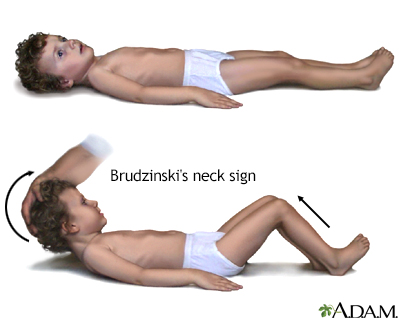
One of the physically demonstrable symptoms of meningitis is Brudzinski's sign. Severe neck stiffness causes a patient's hips and knees to flex when the neck is flexed.
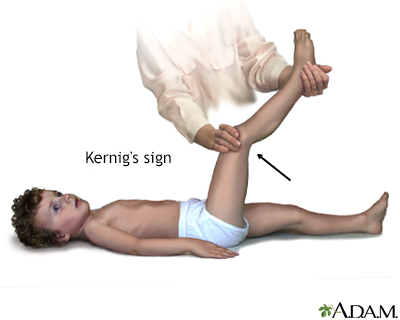
One of the physically demonstrable symptoms of meningitis is Kernig's sign. Severe stiffness of the hamstrings causes an inability to straighten the leg when the hip is flexed to 90 degrees.
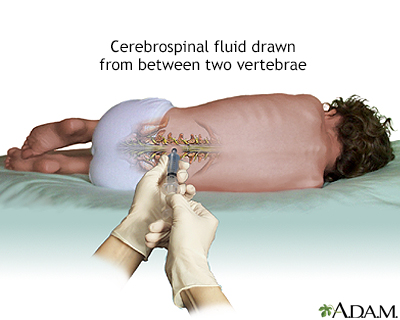
A lumbar puncture, or spinal tap, is a procedure to collect cerebrospinal fluid to check for the presence of disease or injury. A spinal needle is inserted, usually between the third and fourth lumbar vertebrae in the lower spine. Once the needle is properly positioned in the subarachnoid space (the space between the spinal cord and its covering, the meninges), pressures can be measured and fluid can be collected for testing.
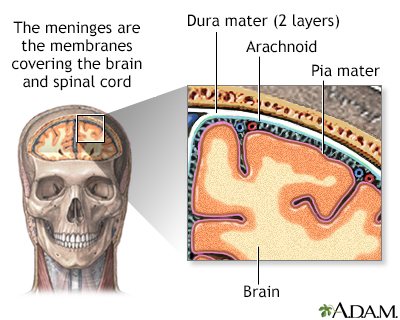
The organs of the central nervous system (brain and spinal cord) are covered by connective tissue layers collectively called the meninges. Consisting of the pia mater (closest to the CNS structures), the arachnoid and the dura mater (farthest from the CNS), the meninges also support blood vessels and contain cerebrospinal fluid. These are the structures involved in meningitis, an inflammation of the meninges, which, if severe, may become encephalitis, an inflammation of the brain.
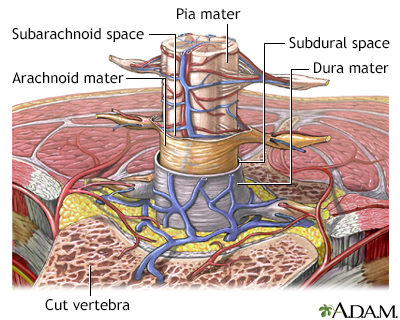
The organs of the central nervous system (brain and spinal cord) are covered by 3 connective tissue layers collectively called the meninges. Consisting of the pia mater (closest to the CNS structures), the arachnoid and the dura mater (farthest from the CNS), the meninges also support blood vessels and contain cerebrospinal fluid. These are the structures involved in meningitis, an inflammation of the meninges, which, if severe, may become encephalitis, an inflammation of the brain.
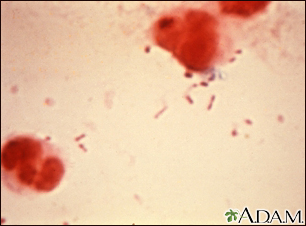
This is a Gram stain of spinal fluid from a person with meningitis. The rod-like organisms seen in the fluid are Haemophilus influenza, one of the most common causes of childhood meningitis (prior to the widespread use of the H influenza vaccine). The large red-colored objects are cells in the spinal fluid. A vaccine to prevent infection by Haemophilus influenza (type B) is available as one of the routine childhood immunizations (Hib), typically given at 2, 4, and 12 months.
Causes
The most common causes of meningitis are viral infections. These infections usually get better without treatment. But, bacterial meningitis infections are very serious. They may result in death or brain damage, even if treated. A lumbar puncture (or spinal tap) is required to determine the specific cause.
Meningitis may also be caused by:
- Chemical irritation
- Drug allergies
- Fungi
- Parasites
- Tumors
Many types of viruses can cause meningitis:
- Enteroviruses: These are viruses that also can cause intestinal illness.
- Herpes viruses: These are the same viruses that can cause cold sores and genital herpes. However, people with cold sores or genital herpes do not have a higher chance of developing herpes meningitis.
- HIV.
- Mumps virus.
- West Nile virus: This virus is spread by mosquito bites and is an important cause of viral meningitis in most of the United States.
Symptoms
Enteroviral meningitis occurs more often than bacterial meningitis and is milder. It usually occurs in the late summer and early fall. It most often affects children and adults under age 30. Symptoms may include:
- Headache
- Sensitivity to light (photophobia)
- Slight fever
- Upset stomach and diarrhea
- Fatigue
Bacterial meningitis is an emergency. You will need immediate treatment in a hospital. Symptoms usually come on quickly, and may include:
- Fever and chills
- Mental status changes
- Nausea and vomiting
- Sensitivity to light
- Severe headache
- Stiff neck
Other symptoms that can occur with this disease:
- Agitation
- Bulging fontanelles in babies
- Decreased alertness
- Poor feeding or irritability in children
- Rapid breathing
- Unusual posture, with the head and neck arched backward (opisthotonos)
You cannot tell if you have bacterial or viral meningitis by how you feel. Your health care provider must find out the cause. Go to a hospital emergency department right away if you think you have symptoms of meningitis.
Exams and Tests
Your provider will examine you. This may show:
- Fast heart rate
- Fever
- Mental status changes
- Stiff neck
If the provider thinks you have meningitis, a lumbar puncture (spinal tap) should be done to remove a sample of spinal fluid (cerebrospinal fluid, or CSF) for testing.
Other tests that may be done include:
Treatment
Outlook (Prognosis)
Early diagnosis and treatment of bacterial meningitis is essential to prevent permanent neurological damage. Viral meningitis is usually not serious, and symptoms should disappear within 2 weeks with no lasting complications.
Possible Complications
Without prompt treatment, meningitis may result in the following:
- Brain or neurologic damage
- Buildup of fluid between the skull and brain (subdural effusion)
- Hearing loss
- Buildup of fluid inside the skull that leads to brain swelling (hydrocephalus)
- Seizures
- Death
When to Contact a Medical Professional
If you think that you or your child has symptoms of meningitis, get emergency medical help immediately. Early treatment is key to a good outcome.
Prevention
Certain vaccines can help prevent some types of bacterial meningitis:
- Haemophilus vaccine (HiB vaccine) given to children helps.
- Pneumococcal vaccine is given to children and adults.
- Meningococcal vaccine is given to children and adults; some communities hold vaccination campaigns after an outbreak of meningococcal meningitis.
Household members and others in close contact with people who have meningococcal meningitis should receive antibiotics to prevent becoming infected.
References
Hasbun R, Van de Beek D, Brouwer MC, Tunkel AR. Acute meningitis. In: Bennett JE, Dolin R, Blaser MJ, eds. Mandell, Douglas, and Bennett's Principles and Practice of Infectious Diseases. 9th ed. Philadelphia, PA: Elsevier; 2020:chap 87.
Nath A. Meningitis: bacterial, viral, and other. In: Goldman L, Schafer AI, eds. Goldman-Cecil Medicine. 26th ed. Philadelphia, PA: Elsevier; 2020:chap 384.
Version Info
Last reviewed on: 12/4/2022
Reviewed by: Jatin M. Vyas, MD, PhD, Associate Professor in Medicine, Harvard Medical School; Associate in Medicine, Division of Infectious Disease, Department of Medicine, Massachusetts General Hospital, Boston, MA. Also reviewed by David C. Dugdale, MD, Medical Director, Brenda Conaway, Editorial Director, and the A.D.A.M. Editorial team.
