
Arrhythmia - Heart Rhythm Disorders
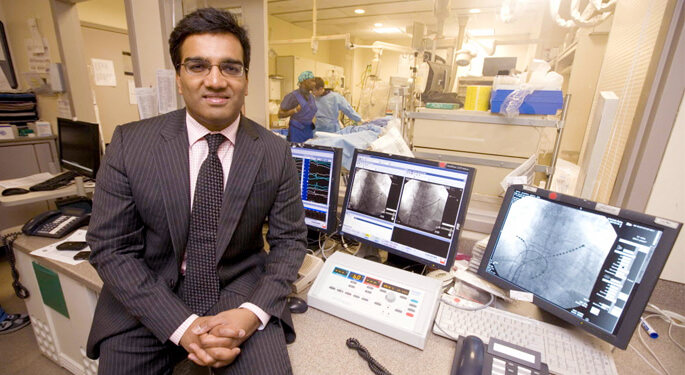
"We combine technology, technique, and specialized expertise—that's how we provide our patients with the highest-quality and most advanced care," says Vivek Reddy, MD, Director of Arrhythmia Services for the Mount Sinai Health System. "Our patients can feel assured they've chosen a facility that offers state-of-the-art treatments for cardiac arrhythmias, as well as the experts who can tailor those treatments for the most customized care."
Mount Sinai Fuster Heart Hospital has led the way in diagnosing and treating arrhythmia and heart disease for more than a century. The Mount Sinai Hospital, ranked 8th in the country for cardiology and heart surgery by U.S. News and World Report, has long led the way in the field of cardiac electrophysiology.
Why Choose Mount Sinai
Mount Sinai Fuster Heart Hospital's excellence in arrhythmia services spans across New York City. We serve patients at the Helmsley Center for Electrophysiology at The Mount Sinai Hospital, on the Upper East Side of Manhattan, and the Al-Sabah Arrhythmia Institute at Mount Sinai Morningside on the Upper West Side.
We offer a full range of therapies for all types of arrhythmia, from the more common supraventricular tachycardia to the more challenging rhythms: atrial fibrillation and ventricular tachycardia. Patients come to us from all over the world because of our clinical expertise, leadership in the field of electrophysiology, innovative research, and involvement with the latest therapies through clinical trials. Our arrhythmia specialists, electrophysiologists, are skilled in performing even the most delicate arrhythmia procedure.
Our goal every day is to continue to advance the treatment of arrhythmias across the Mount Sinai Health System, using the latest evidence-based science with personalized heart rhythm disorder patient care. Our experienced, highly-skilled physicians work with a multidisciplinary team of imaging specialists, cardiovascular surgeons, nurses, and other clinicians to ensure each patient receives the most comprehensive diagnosis and treatment possible.